
Quick Expert Answer
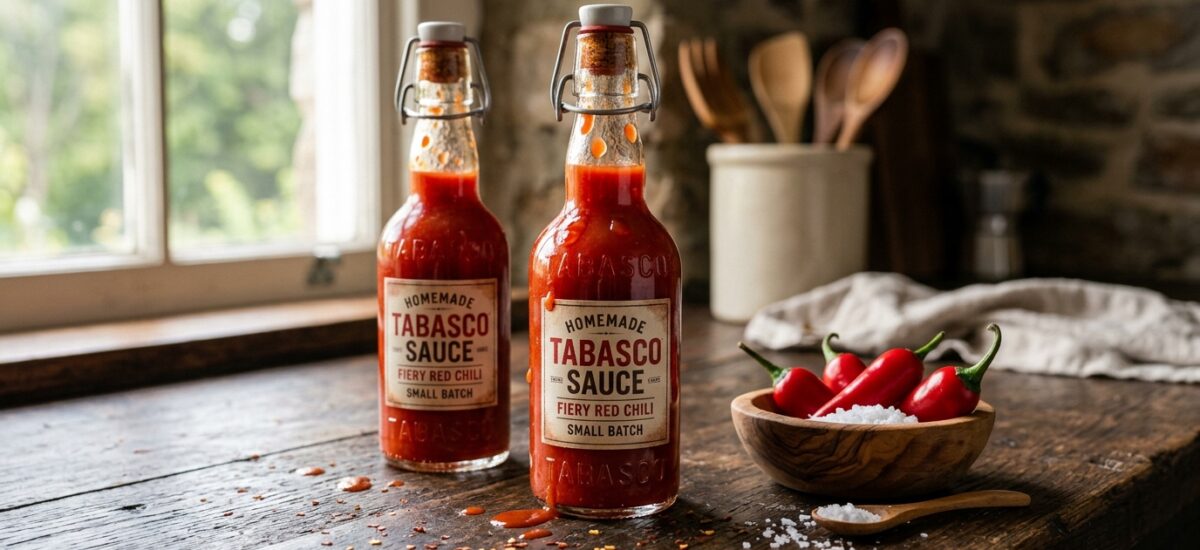
Authentic homemade Tabasco-style hot sauce is made by lacto-fermenting crushed red Tabasco or Thai bird's eye chilies in a 3% to 5% kosher salt brine (by weight) for 14 to 30 days until the pH drops below 3.8, then blending with distilled white vinegar at a 1:1 ratio and straining out the mash. Maintaining an anaerobic salt environment prevents spoilage while creating lactic acid complexity that raw vinegar sauces cannot replicate. For the gear, see Our Calphalon Premier Space review.
Affiliate Disclosure: FoodJot is reader-supported. When you buy through links on our site, we may earn an affiliate commission at no extra cost to you.
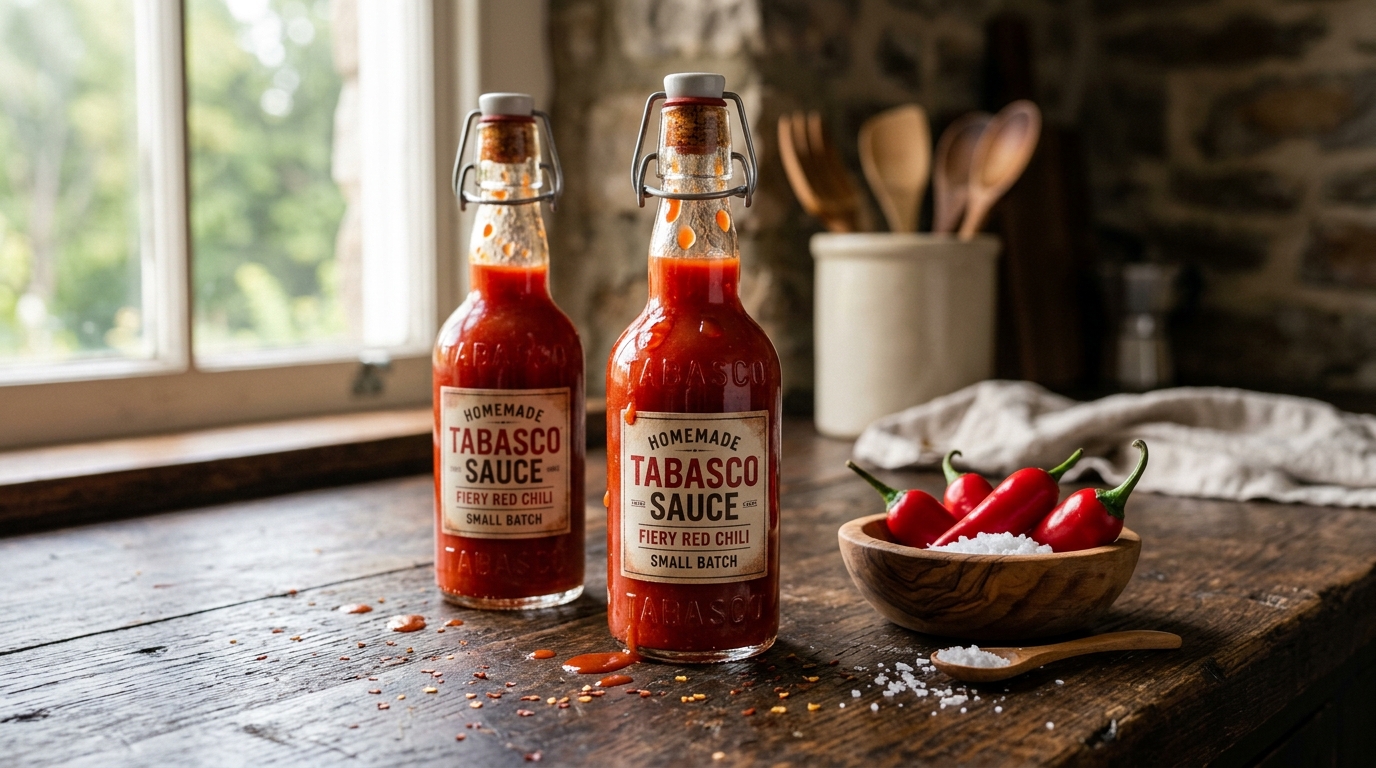
Since Edmund McIlhenny first planted hot pepper seeds on Avery Island, Louisiana in 1868, Tabasco brand pepper sauce has reigned supreme as the world’s most recognized and enduring condiment. Found on breakfast tables in New Orleans, military MRE rations across desert battlefields, and Michelin-starred seafood raw bars worldwide, its distinct fiery vinegar bite and aged pepper complexity are unmatched. But what shocks most home cooks is the astonishing simplicity of its composition: true Louisiana Tabasco sauce contains only three ingredients—fully ripened red Tabasco chili peppers, unrefined Avery Island salt, and high-grain distilled white vinegar. (For another reader favorite, check out our Master the Heat: Your Guide to Homemade Tabasco Sauce.)
There are zero artificial preservatives, zero added sugars, zero thickeners, and zero garlic or onion fillers. The profound depth of genuine Tabasco doesn’t come from a crowded ingredient list; it comes from the ancient alchemy of wild lacto-fermentation followed by slow wood-barrel aging. While modern hot sauce trends like the fiery, oil-bloomed cayenne dip in our Dave’s Hot Chicken Recipe rely on blistering immediate heat and sweetness, Tabasco is a masterclass in fermented acidity and bright, lingering pepper aroma. In this master guide, we decode the 150-year-old Avery Island process so you can craft cellar-grade hot sauce at home. (If you enjoy this topic, you may also love Homemade Valentina Hot Sauce (Made With Real Dried Chiles): Your Authentic Mexican Flavor Guide.)
The Avery Island Trinity: The Only 3 Ingredients You Need
Unlike commercial taco sauces or Mexican picante sauces laden with tomato puree, cumin, and xanthan gum, authentic Tabasco requires absolute purity: (Pair this with our step-by-step guide to Authentic Cholula Hot Sauce Copycat Recipe: Make Mexican-Style Pepper Sauce at Home.)
| Ingredient | Traditional Standard | Home Kitchen Alternative | Culinary Purpose |
|---|---|---|---|
| Red Tabasco Peppers | Capsicum frutescens (30,000–50,000 SHU) | Ripe Red Fresno, Bird’s Eye, or Red Jalapeños | Provides juicy flesh, high natural sugars for fermentation, and glowing ruby color. |
| Avery Island Salt | Mined rock salt from Louisiana salt domes | Non-iodized Coarse Kosher or Sea Salt | Inhibits harmful mold/bacteria while encouraging beneficial Lactobacillus. |
| Distilled White Vinegar | High-proof grain vinegar (5% to 6% acidity) | Standard Organic Distilled White Vinegar | Arrests fermentation, balances fiery capsaicin, and creates the sharp splashable body. |
The Food Science of Pepper Fermentation & Oak Aging
Why can’t you just puree raw hot peppers with vinegar and call it Tabasco? The answer lies in fermentative biochemistry: (For more kitchen inspiration, explore Fiery & Flavorful: Homemade Habanero Hot Sauce with Carrots and Mango.)
1. The Wild Lacto-Fermentation Phase: Fresh chili pepper skins are covered in microscopic, naturally occurring lactic acid bacteria (primarily Lactobacillus plantarum). When you mash the peppers with salt (typically 8% to 10% salt by weight in commercial production, or 3.5% to 5% for faster home fermentation), the osmotic pressure draws out the pepper’s natural cellular juices. In an anaerobic (oxygen-free) environment, the bacteria consume the pepper sugars, producing lactic acid, carbon dioxide, and dozens of complex aromatic esters. This drops the pH below 3.8, permanently preserving the mash. (See also our complete culinary breakdown on Forget Store-Bought: This Is the Only Tabasco Sauce Recipe You'll Ever Need.)
2. Wood Tannins & Esterification: In Avery Island, the mash is sealed in white oak whiskey barrels topped with a thick salt cap and aged for up to three full years. During aging, wood tannins mellow the harsh vegetal edges of raw capsaicin, transforming sharp bite into a rounded, wine-like fruitiness. At home, you can replicate this historic depth by adding charred white oak chips directly to your fermentation jar! You can also check the latest price and verified kitchen reviews on Amazon.
Product Spotlight
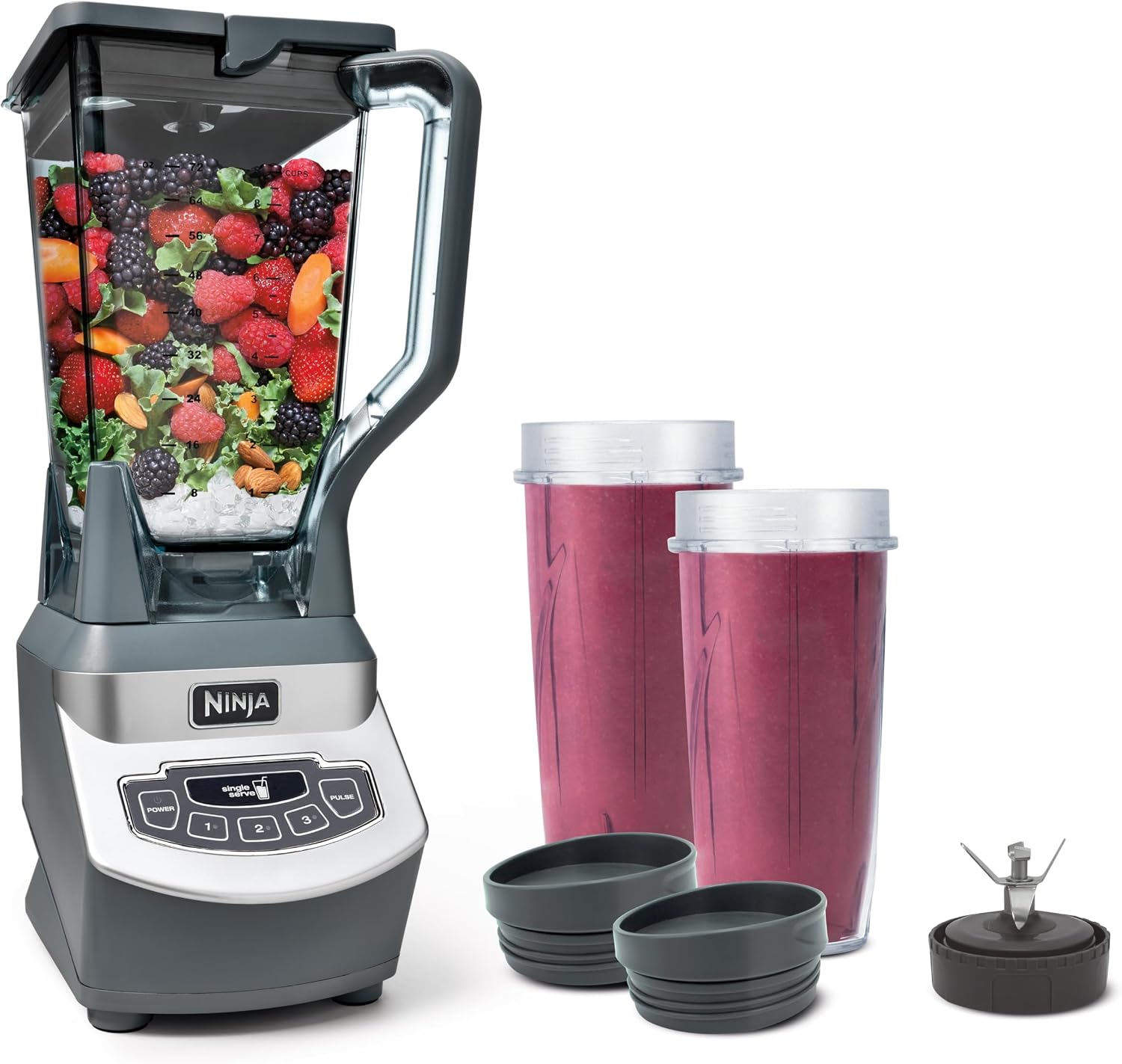
Ninja BL660 Professional Countertop Blender
$139.99Fermented chili skins and seeds are notoriously tough and fibrous. Standard low-wattage blenders leave coarse chunks that clog condiment bottles and separate in the fridge. As tested in our hands-on Ninja Professional Countertop Blender Review, its 1100-watt motor and stacked 6-blade assembly pulverize fermented pepper mash and vinegar into a silky, suspended micro-emulsion in under 60 seconds.
Buy on AmazonHow to Make Homemade Tabasco Sauce Step-by-Step
Step 1: Selecting and Destemming Ripe Red Peppers
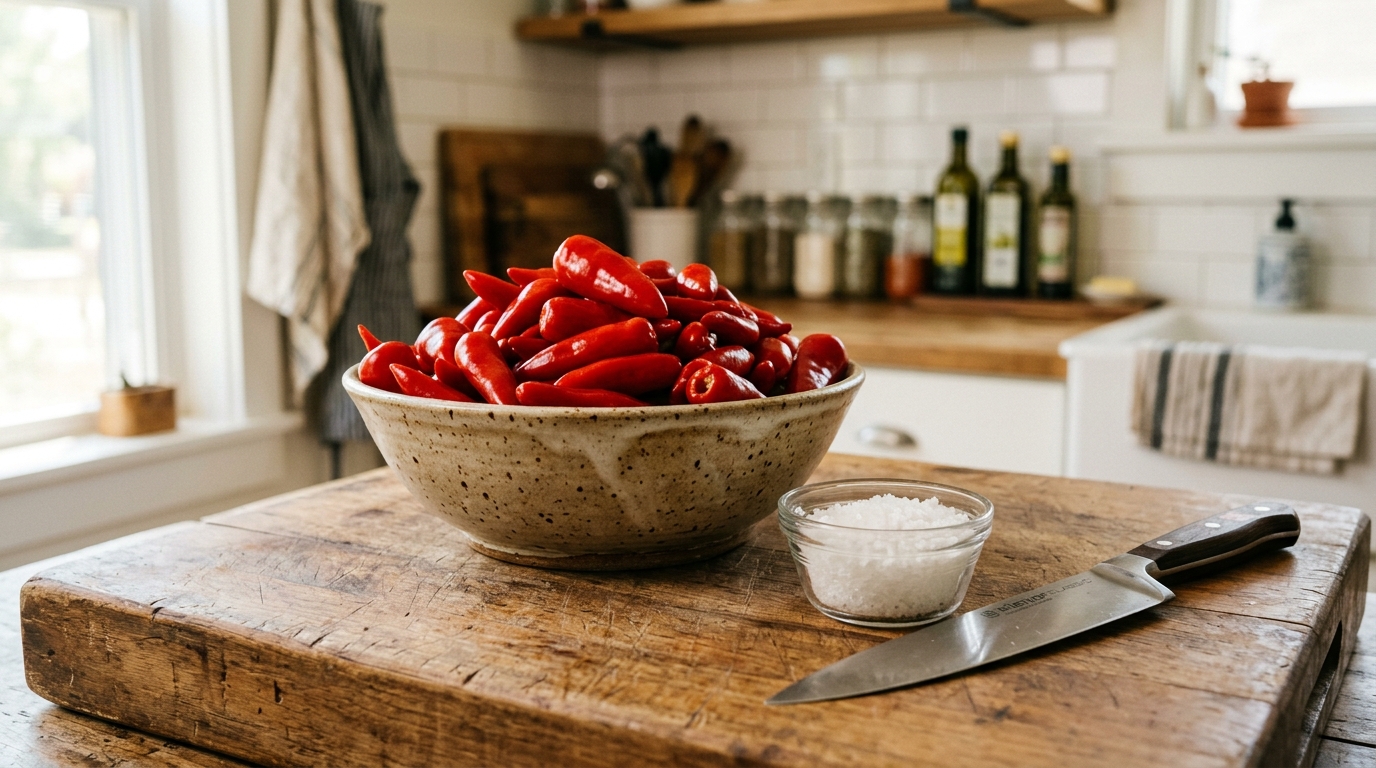
Begin with 1 pound of fully ripe, deep crimson hot peppers. Authentic Tabasco peppers are best, but bright red Fresno chilies or red bird’s eye chilies yield sensational results. Inspect each pepper: discard any with blemishes or soft rot. Pluck the green stems off. Do not core or remove the seeds—the seeds and white inner pith contain the highest concentration of capsaicin and essential pepper oils.
Step 2: Grinding the Salted Pepper Mash
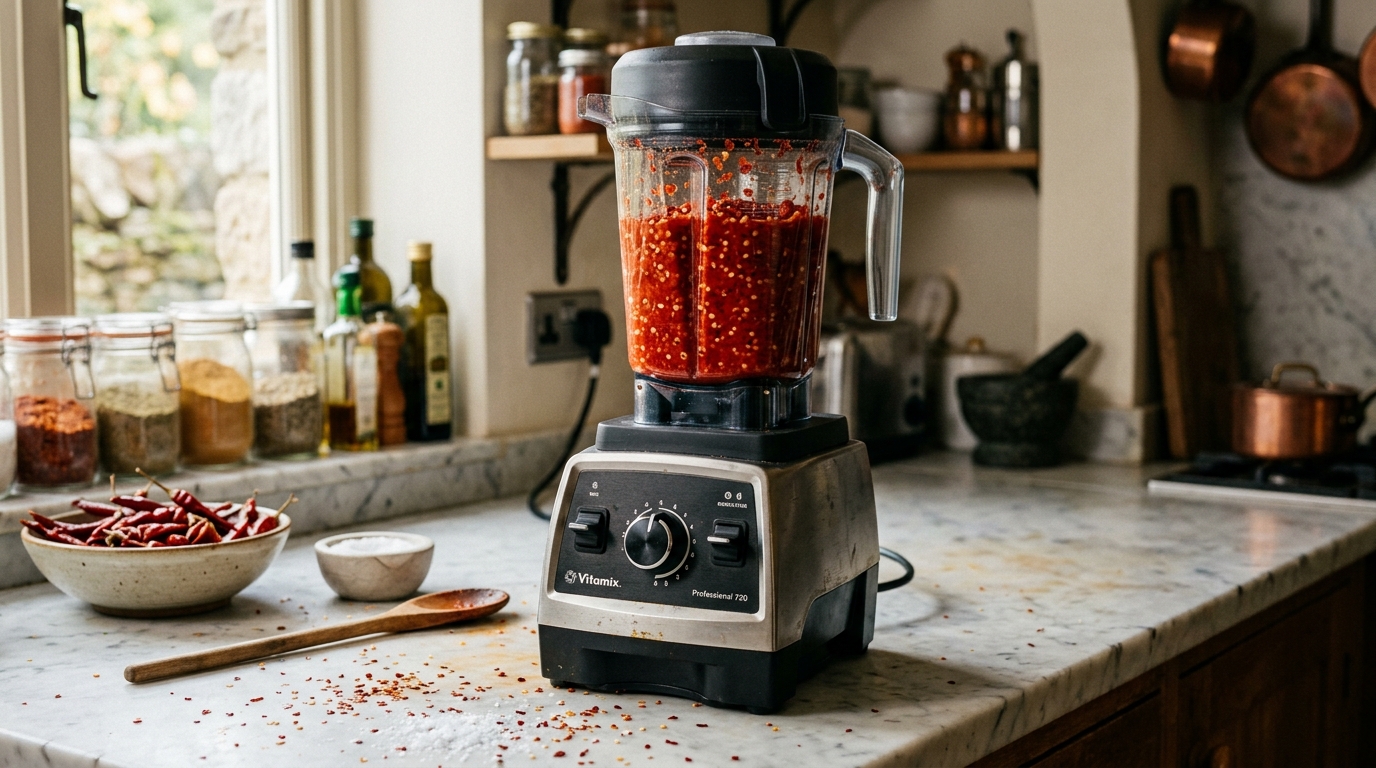
Transfer the destemmed peppers to your Ninja BL660 blender pitcher. Add 1.5 tablespoons (approx. 25 grams) of non-iodized coarse sea salt. Pulse in short 2-second bursts until the peppers break down into a chunky, textured puree (similar to fine relish). Avoid over-pureeing at this stage; keeping small chunks creates pathways for fermentation gas to bubble upward without blowing the liquid out of your jar.
Step 3: The Anaerobic Fermentation & Oak Aging
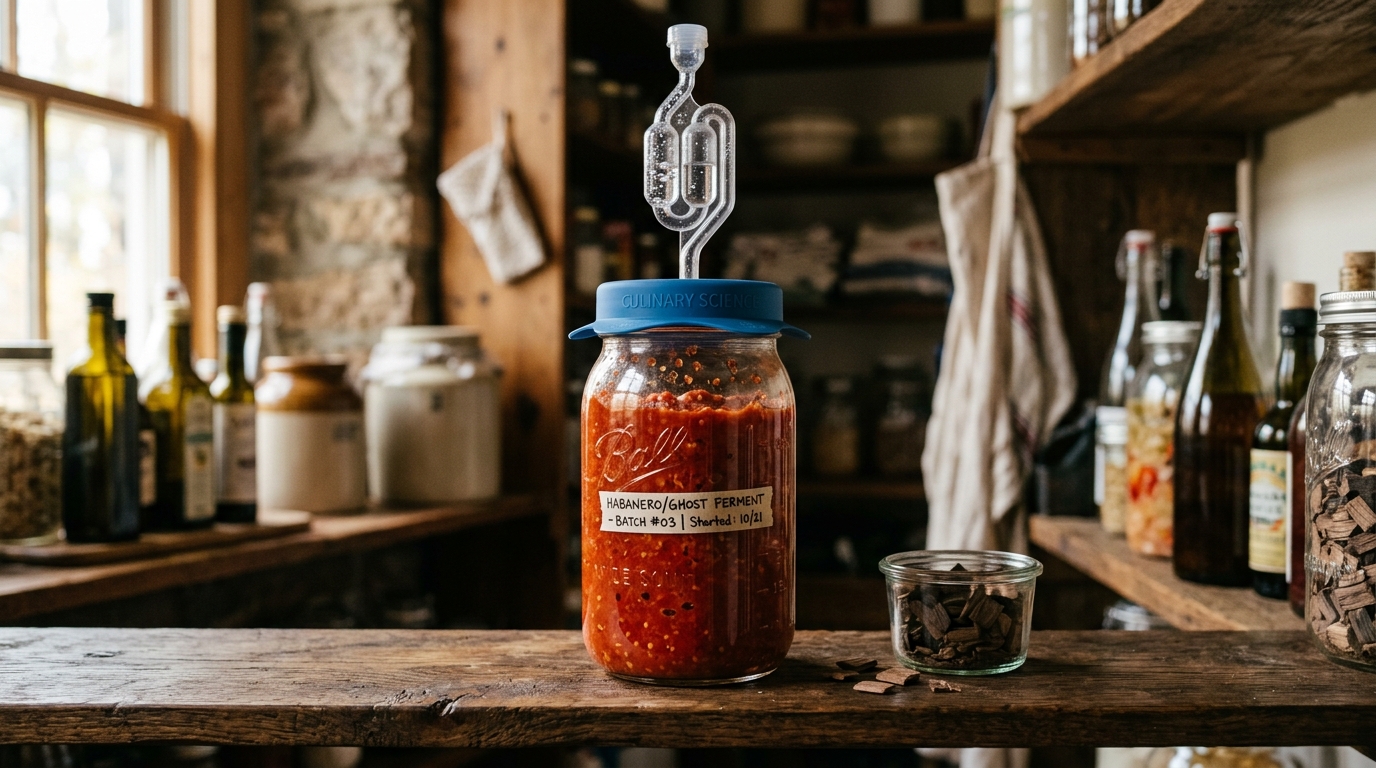
Pack the salted mash tightly into a clean 1-quart glass Mason jar, pressing down firmly with a spoon to eliminate trapped air pockets. If desired, drop in a few toasted white oak wood chips for authentic barrel nuance. Sprinkle an extra 1/2 teaspoon of salt across the top surface to form an antibacterial barrier. Seal with a silicone fermentation lid fitted with a water airlock. Store in a dark, temperate pantry (68°F–75°F / 20°C–24°C) for a minimum of 2 to 4 weeks (or up to 6 months for deep vintage complexity).
Step 4: The Vinegar Blending Phase
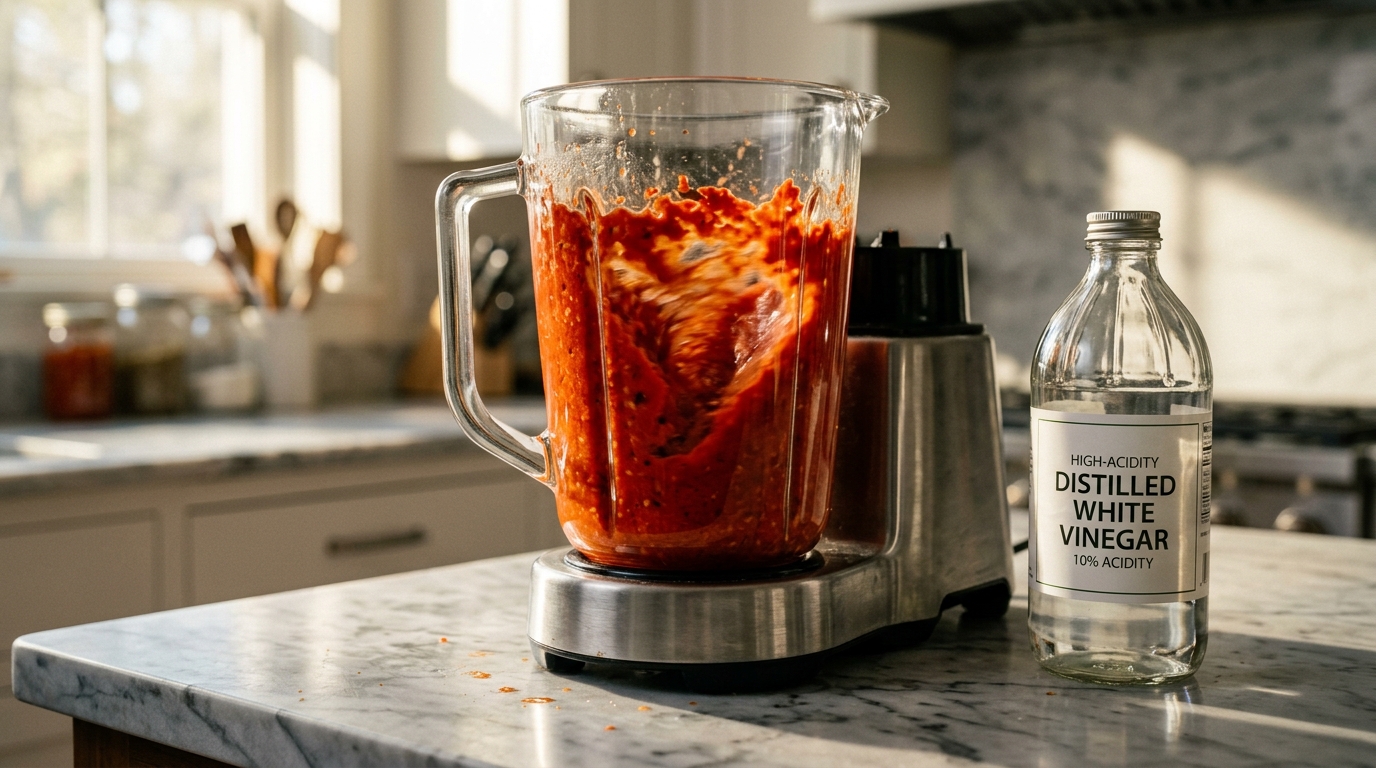
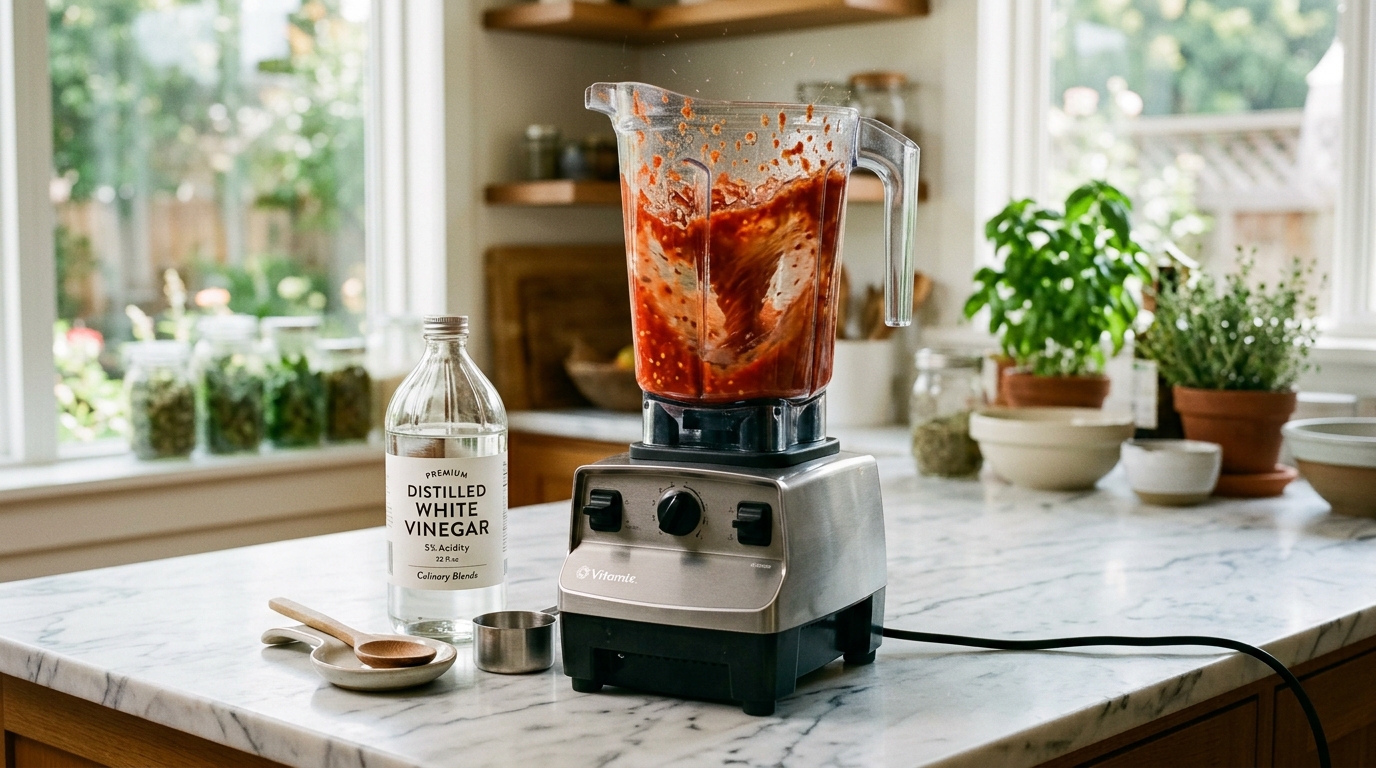
Once your mash has fermented to a pleasant, tangy, pickled aroma with no signs of mold, open the jar. The color will have deepened from bright red to a rich, dark crimson brick tone. Pour the fermented mash along with all accumulated brine into the blender. Add 1 cup of premium distilled white vinegar (5% acidity). Blend on high speed for 60 to 90 seconds until the mixture is completely liquefied and silky smooth.
Step 5: Fine-Mesh Straining & Pressing
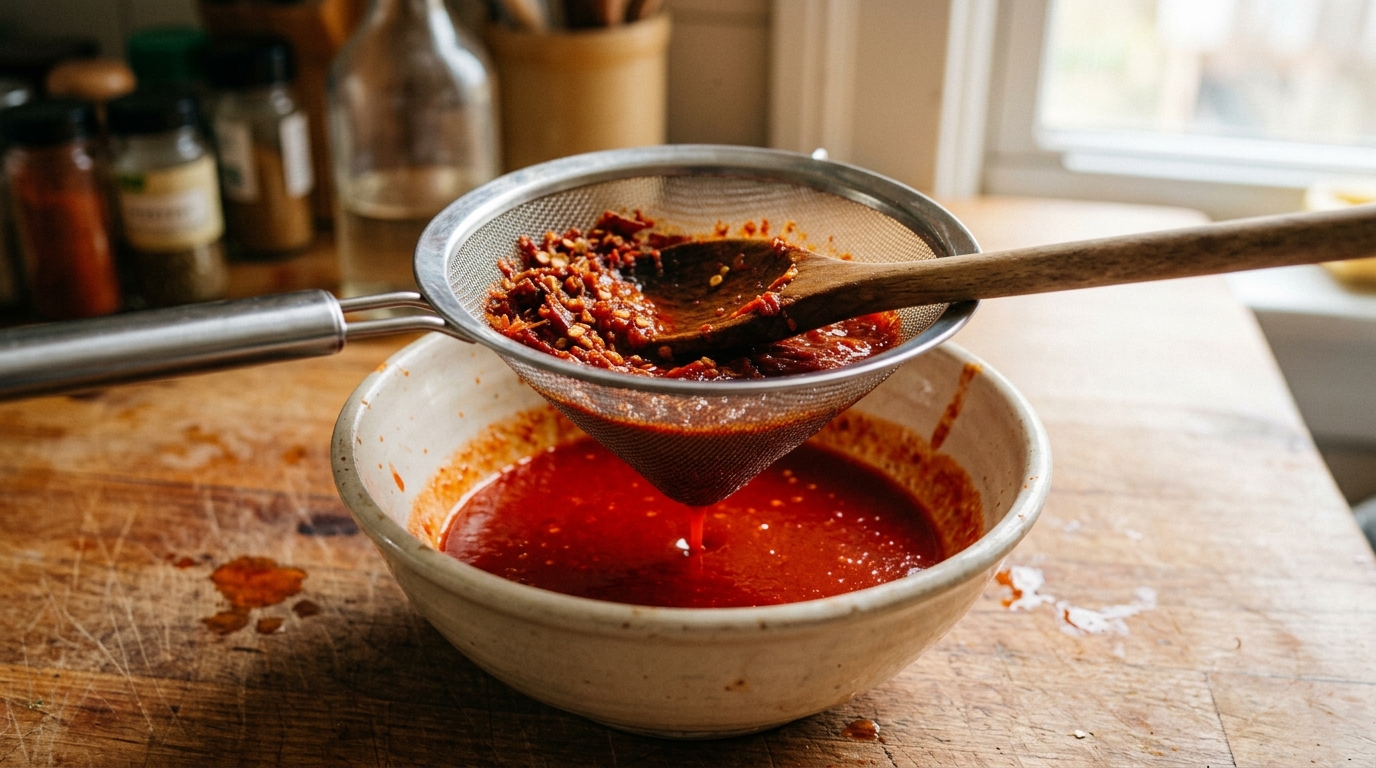
Set a fine conical stainless steel mesh strainer over a wide ceramic or glass bowl. Pour the blended hot sauce into the strainer. Use the back of a wooden ladle or silicone spatula to press firmly against the pulp, extracting every drop of concentrated spicy red liquid. The remaining pulp and cracked seeds should be almost completely dry. (Don’t throw away the leftover spicy pulp—dehydrate it to make homemade fermented chili flakes!)
Step 6: Bottling in Classic Woozy Bottles
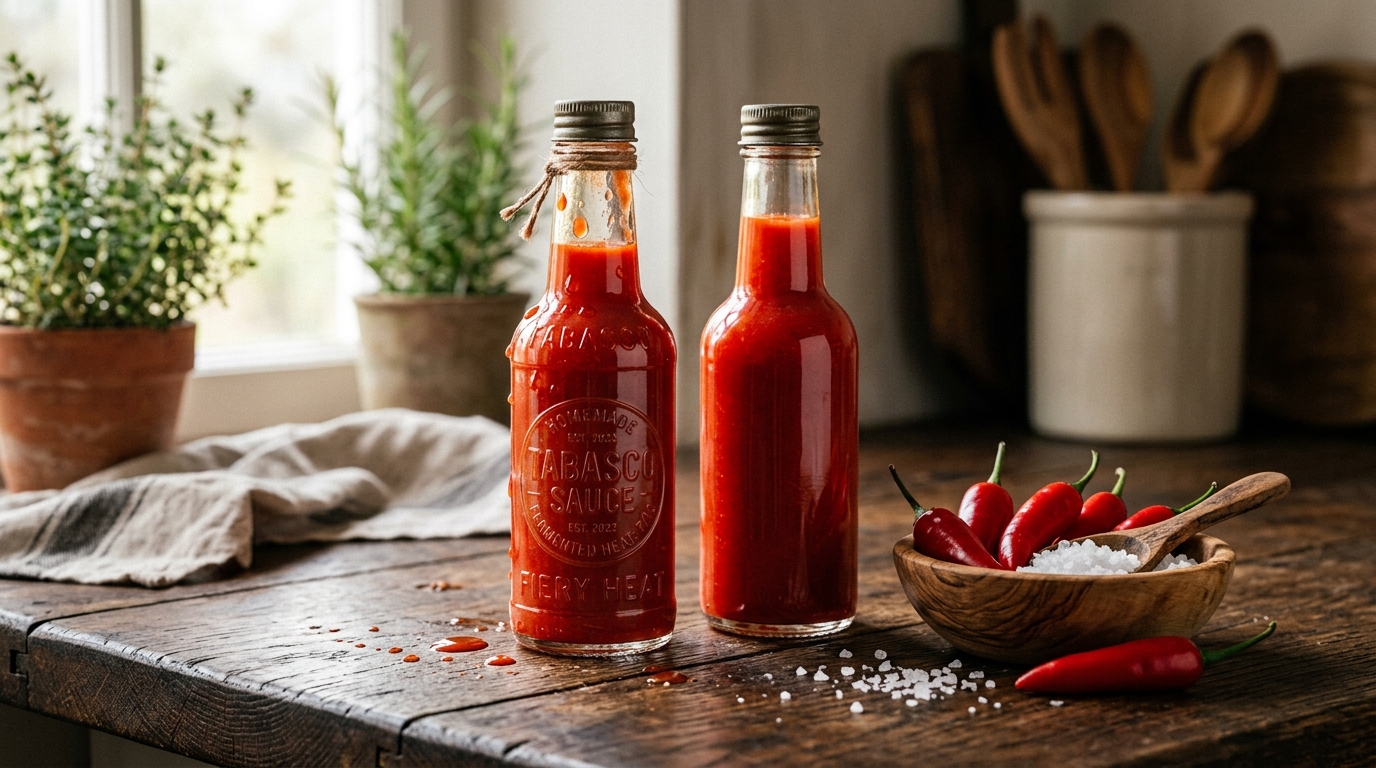
Insert a mini stainless steel funnel into the neck of sterilized 5-ounce glass woozy bottles (dash bottles). Carefully pour the vibrant, strained hot sauce into each bottle, leaving 1/2 inch of headspace. Insert the plastic shaker dripper insert into the mouth and cap tightly with screw-on lids. Because of the high acidity (pH < 3.5) and salt content, your homemade Tabasco sauce is naturally shelf-stable for years!
Step 7: The Flavor Test & Culinary Pairings
Give the bottle a good shake and splash a few drops onto fresh raw Gulf oysters, a skillet of sizzling scrambled eggs with avocado toast, or a steaming bowl of gumbo. Notice the immediate burst of crisp, clean vinegar acidity, followed by the deep, fruit-forward hum of fermented chili, and concluding with a warm, steady capsaicin glow across your palate. It is vibrant, sharp, and infinitely superior to store-bought bottles.
Authentic Homemade Tabasco Sauce Recipe (Avery Island Clone)
Ingredients & Equipment
- The Pure 3 Ingredients:
- 1 lb fresh ripe red Tabasco peppers (or red Fresno/Bird’s Eye)
- 1.5 tbsp coarse non-iodized sea salt (or kosher salt)
- 1 cup organic distilled white vinegar (5% acidity)
- Optional Aging Accent:
- 1-2 toasted white oak chips (for authentic barrel depth)
- Required Equipment:
- 1-quart glass Mason jar with silicone fermentation lid & airlock
- High-speed blender (Ninja BL660)
- Fine conical stainless steel mesh strainer
- Glass 5-oz woozy hot sauce bottles with dash tops
Instructions
- Destem Peppers: Wash and dry ripe red peppers. Pull off green stems, leaving seeds and inner ribs intact.
- Pulse Mash: Combine peppers and non-iodized sea salt in blender. Pulse into a coarse, juicy relish consistency.
- Pack & Ferment: Pack mash into a glass jar, add toasted oak chips if using, and fit with an airlock. Ferment in a dark pantry for 2 to 4 weeks.
- Blend with Vinegar: Transfer fermented mash and liquid to blender. Pour in distilled white vinegar. Blend on high for 90 seconds.
- Strain Smooth: Pour through a fine-mesh strainer over a bowl. Press firmly with a ladle to extract all liquid. Discard or dehydrate pulp.
- Bottle & Cure: Funnel into 5-oz woozy dash bottles. Insert restrictor tops and cap. Ready immediately; improves with age!
Culinary Craft, Acid Balance & Gastronomic Pairings
The culinary brilliance of Tabasco sauce lies in its ability to cut through fat and elevate savory richness without masking the underlying dish. In rich European heritage cooking, splashing sharp, aged pepper vinegar over heavy cuts—such as the crisp, pan-blistered textures in our classic Lyon-Style Fried Tripe Recipe—cleanses the palate between bites. Similarly, in Latin American comfort classics like deeply simmered Sopa de Mondongo (Tripe Soup), a few generous dashes of fermented Tabasco awaken the rich beef marrow broth with bright, lively acidity.
Acid balance is equally transformative in modern fusion dining. Adding a subtle drop of aged chili vinegar to the delicate, creamy seafood richness of our Creamy Tobiko Sauce Pasta highlights the savory popping roe with sophisticated contrast. For home cooks expanding their artisan culinary repertoire, mastering pantry staples goes hand-in-hand with exploring specialized techniques, from selecting the Best Sushi Making Kits for Beginners to outfitting party brunch setups with our tested Best Mini Donut Maker Review. And whether you are balancing intense heat across fiery dishes like our viral Dave’s Hot Chicken Recipe, refreshing your palate with a cold spoon of copycat Wendy’s Frosty Recipe, or enjoying space-age crunchy snacks like Homemade Freeze-Dried Candy, understanding acid, salt, and heat is the ultimate superpower of every great cook.
Frequently Asked Questions (FAQ)
Can I make Tabasco sauce with other hot peppers?
Yes! If fresh Tabasco peppers are unavailable at your local farmers market, ripe red Fresno peppers, red bird’s eye chilies (Thai chiles), or ripe red serranos make outstanding substitutes. Just ensure the peppers are fully red and ripe, as green peppers have higher bitterness and lower natural sugars for fermentation.
How long does homemade Tabasco sauce last?
Because the combination of active lacto-fermentation and distilled vinegar drops the pH below 3.4, homemade Tabasco sauce is naturally preserved and will remain safe at room temperature for at least 2 to 3 years. Storing it in a dark cupboard prevents light from fading the brilliant red color.
Why is non-iodized salt necessary for fermentation?
Standard table salt contains iodine and anti-caking agents (like sodium ferrocyanide), which inhibit the growth of beneficial lactic acid bacteria and can cause an unpleasant cloudy discoloration in fermented brines. Always use pure coarse sea salt or pickling salt.
Can I skip fermentation?
Yes, you can simmer fresh red chilies with vinegar and salt for 15 minutes for a fast table sauce, but fermentation adds that authentic tangy depth and complex umami you can’t get from fresh blends alone. If you’re short on time, try a quick simmered hot sauce, or let nature work its magic for 2–4 weeks for the true Avery Island flavor.
🌶️ Pair Your Homemade Hot Sauce With These Crispy Favorites
Your authentic homemade hot sauce deserves the perfect crunchy pairing. Check out our favorites:
- 📖 Dave’s Hot Chicken Recipe: Copycat Nashville Hot Chicken — Coat juicy fried tenders in your homemade spicy oil blend and Dave’s sauce.
- 📖 Crispy Fried Tripe Recipe: Classic Lyon-Style Tablier — Dip crunchy breaded bistro-style tripe in homemade tangy Louisiana hot sauce.
Expert-Level Q&A
What exact salt percentage and target pH are required for safe lacto-fermented Tabasco sauce?
Use 3% to 5% non-iodized salt by combined weight of peppers and water (e.g., 35g salt per 1,000g total weight). For shelf-stable safety against Clostridium botulinum, the finished sauce must reach a pH of 3.8 or lower; adding distilled white vinegar (5% acidity) after fermentation reliably pushes the final pH down to 3.2–3.5.
How does oak-barrel aging change Tabasco pepper mash compared to standard glass jar fermentation?
Commercial Tabasco ages pepper mash in charred white oak barrels for up to 3 years, allowing micro-oxygenation and lactone extraction from the wood. At home, adding 2 to 3 grams of food-grade toasted medium-char white oak chips per quart jar during a 30-day glass fermentation replicates approximately 70% of those smoky vanillin and tannin notes.
Why does homemade fermented hot sauce separate in the bottle, and how do professionals prevent it?
Separation occurs because pepper pulp solids have a higher density than vinegar and water. Whisking in 0.15% to 0.25% xanthan gum by weight (roughly 1/8 teaspoon per cup of strained sauce) while blending at high speed creates a shear-thinning hydrocolloid network that suspends pepper solids indefinitely without altering flavor.
Want a Free Taste? Get 5 Free Halal Soup Recipes (PDF) →
Download our instant 5-page digital cookbook featuring Express Moroccan Harira, Turkish Garlic Yogurt Chicken Soup, Golden Lentil Soup & more—100% free, phone-friendly PDF.
Gear we used for this recipe