Affiliate Disclosure: This post contains affiliate links. If you make a purchase through them, FoodJot may earn a commission at no additional cost to you.
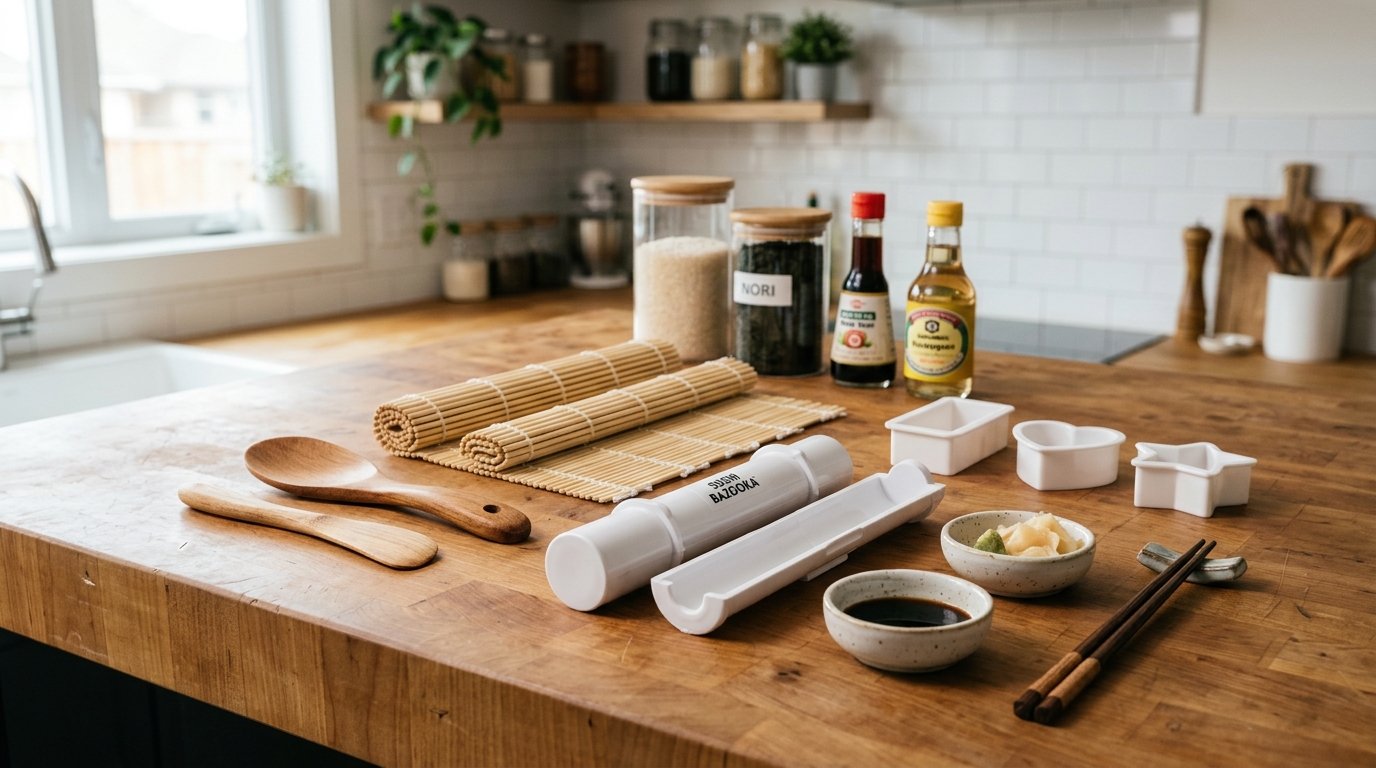
If you have ever stared through the glass at a master sushi chef deftly rolling flawless maki cylinders and thought “I could never pull that off at home,” prepare to have your culinary horizon permanently transformed. Crafting authentic, restaurant-grade sushi in your home kitchen does not require a decade-long Tokyo apprenticeship—it simply requires the right tools engineered to eliminate the friction points.
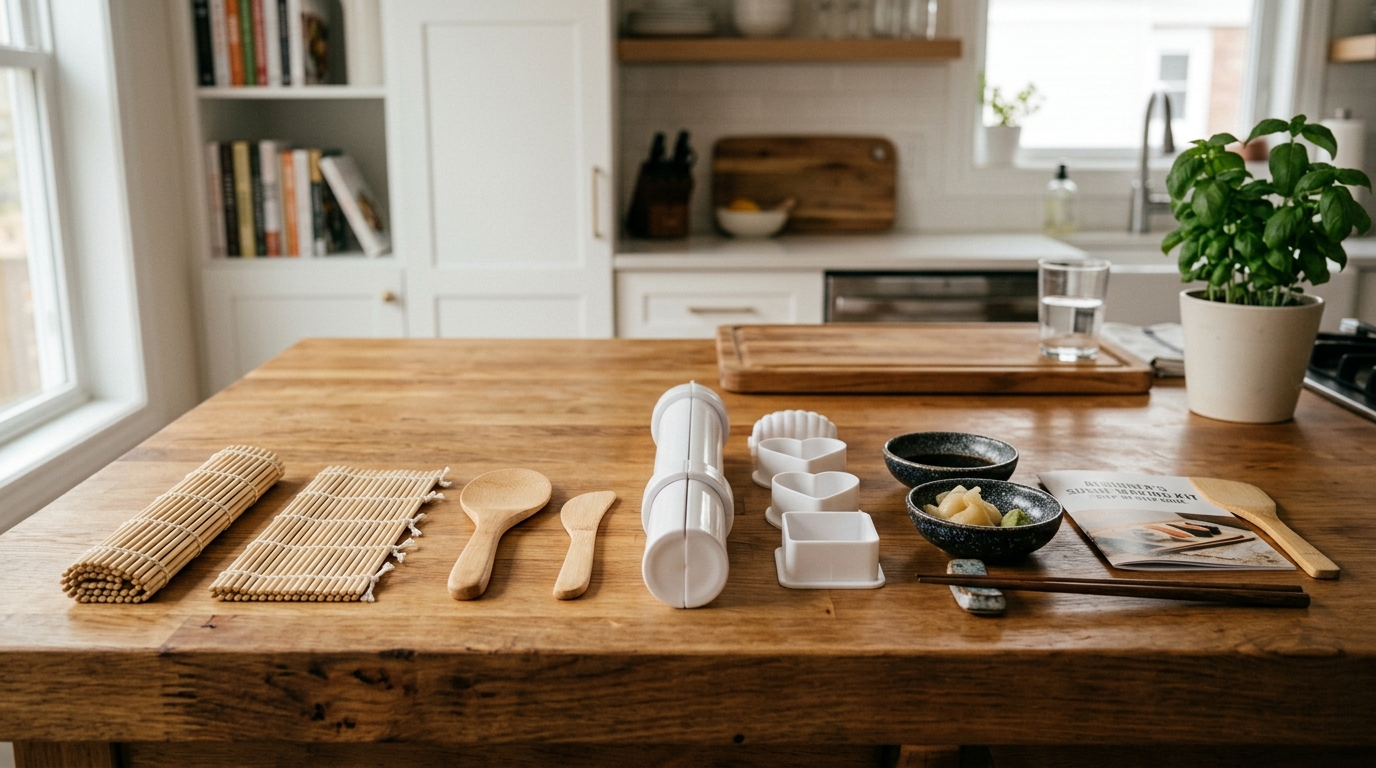
Modern sushi making kits for beginners have completely revolutionized home roll-making. By combining non-stick sushi bazooka extruders, precision bamboo rolling mats (makisu), calibrated rice paddles, and ultra-sharp slicing knives, these all-in-one sets empower anyone to produce tight, cohesive, photo-ready sushi rolls on their very first attempt. Today, we thoroughly review and test the top 4 beginner sushi making kits on Amazon, detail an expert step-by-step master guide, and share our golden ratio recipe for foolproof sushi at home.
Product Spotlight

Delamu Sushi Making Kit (20-in-1 Beginner Set)
The undisputed king of beginner sushi sets. Features a patented high-density BPA-free sushi bazooka extruder, two premium 100% natural bamboo rolling mats, a Japanese-style sushi knife, rice paddles, nigiri molds, and an illustrated beginner’s recipe handbook. Pair your rolls with our savory Tobiko fish roe guide for the ultimate crunchy garnish!
🛒 Check Current Price on AmazonTop 4 Sushi-Making Kits for Beginners: In-Depth Reviews
We evaluated dozens of sushi kits across three vital parameters: ease of compaction, build durability (resilience to stickiness and splintering), and comprehensive accessory value. Below are the definitive top four choices catering to distinct beginner needs.
1. Delamu Sushi Making Kit (20-in-1): The Undisputed Gold Standard
Price: ~$21.99 | Tool Count: 20 Pieces | Material: Food-grade BPA-free polymer & 100% natural bamboo
The Delamu 20-in-1 Kit has earned its status as Amazon’s top-selling sushi kit for good reason: it leaves zero guesswork to chance. The heart of the system is its heavy-duty sushi bazooka tube, which allows novices to pack seasoned sushi rice and fillings into twin semicircles, clamp the unit shut, and extrude a perfectly dense, unified cylinder directly onto nori seaweed.
Unlike cheaper knockoffs with flimsy plastic hinges, Delamu uses reinforced clasps that do not crack under packing pressure. The included bamboo rolling mats are tightly bound with 100% cotton threads and treated to resist waterlogging. Slicing through your finished roll is effortless thanks to the non-stick santoku-style slicing knife included in the box.
- ✓ Pros: Zero-fail bazooka mechanism; includes 2 natural bamboo mats, rice paddle, rice spreader, nigiri mold, 5 pairs of chopsticks, and dipping
- Cons: Hand-wash only recommended for bamboo components to prevent warping.
- Best For: First-time sushi makers, family culinary nights, and foolproof California rolls.
👉 Check Delamu 20-in-1 on Amazon
2. FUNGYAND 27-in-1 Sushi Making Kit: The Ultimate Tool Arsenal

Price: ~$25.99 | Tool Count: 27 Pieces | Material: Premium carbonized bamboo & heavy-duty ABS
If you want sheer variety, the FUNGYAND 27-in-1 Kit delivers an unmatched gadget roster. Beyond the standard bazooka roller and rolling mats, this sprawling set introduces triangular onigiri presses, heart-shaped maki molds, gunkan shaping tools, and an avocado slicer that scoops uniform slivers in a single motion.
The carbonized bamboo mats feature a rich, darker finish that naturally repels stains from dark tamari soy sauce and spicy sriracha mayo. Whether you are throwing a DIY sushi party or prepping fun Bento boxes for school lunches, this kit provides endless creative versatility.
- ✓ Pros: Massive 27-piece selection; dedicated avocado 3-in-1 slicer; fun geometric roll molds (hearts, triangles, round); high-grade carbonized bamboo
- Cons: Storage box can get crowded with so many distinct components.
- Best For: Creative home cooks, festive entertaining, and themed dinner parties.
👉 Check FUNGYAND 27-in-1 on Amazon
3. CraftZee Ultimate Sushi Maker Kit: The Premium Chef Experience

Price: ~$79.99 | Tool Count: 25+ Pieces (Includes Compact Rice Cooker) | Material: Premium wood, alloy steel, culinary silicone
For those seeking an all-in-one culinary workstation that solves the biggest hurdle in sushi making—perfectly steamed, sticky sushi rice—the CraftZee Ultimate Kit stands in a class of its own. It packages a dedicated mini electric rice cooker right inside the box, alongside premium heavy-gauge rolling tools and an authentic forged sushi knife.
Proper sushi rice texture is notoriously tricky on a stovetop, but CraftZee’s integrated cooker guarantees consistently plump, glossy, evenly cooked grains every single batch. It’s the ideal premium gift for dedicated home foodies.
- Pros: Built-in dedicated rice cooker ensures zero burnt or mushy rice; razor-sharp forged Japanese chef blade; luxury gift box presentation.
- Cons: Higher price tier compared to basic manual gadget kits.
- Best For: Serious home chefs, luxury gift giving, and those without a quality rice cooker.
👉 Check CraftZee Ultimate Kit on Amazon
4. Alas Complete 20-Piece Sushi Making Set: Traditional Value Pick
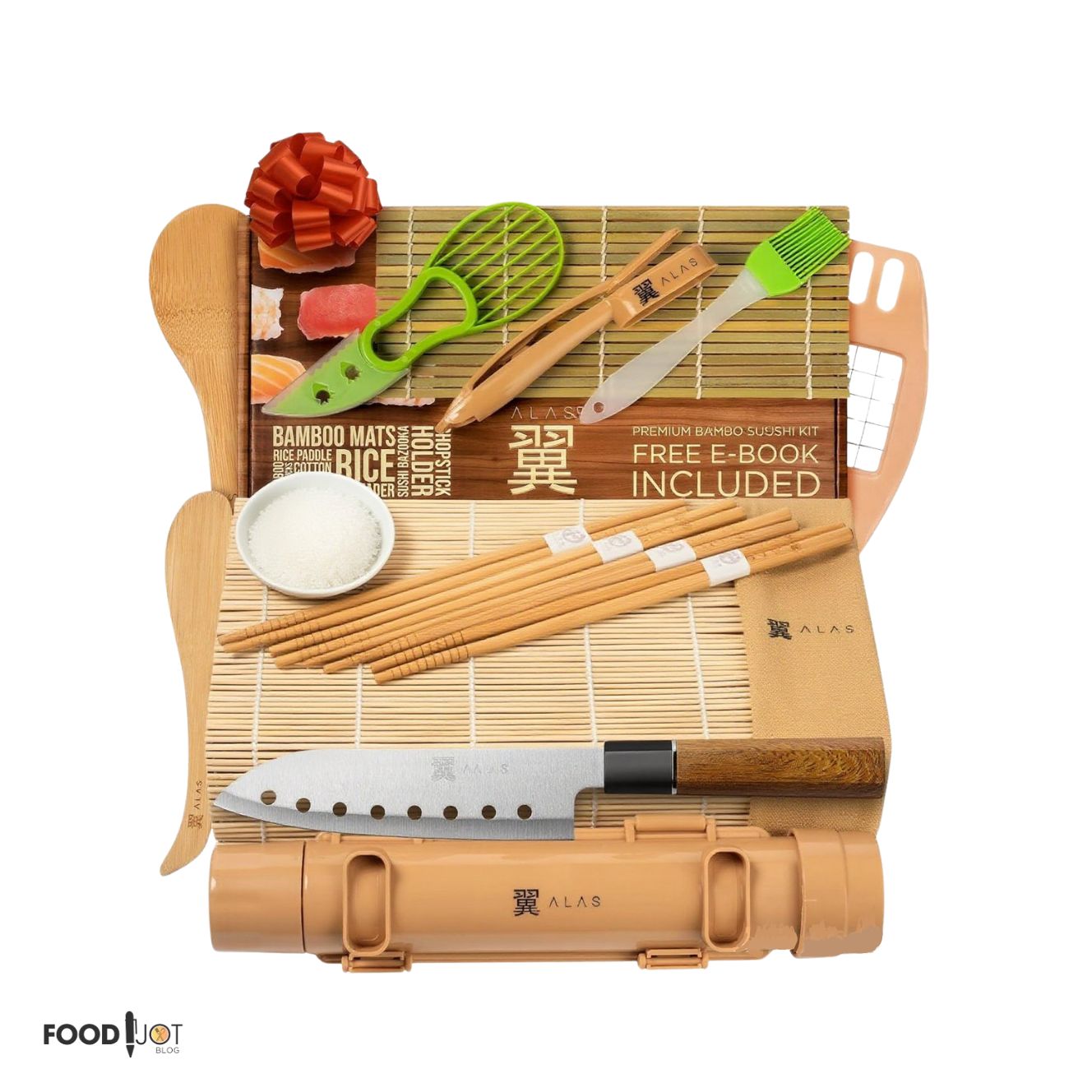
Price: ~$25.99 | Tool Count: 20 Pieces | Material: 100% Organic Bamboo & Natural Wood
If you prefer learning the timeless, traditional craft of sushi rolling without modern plastic plungers, the Alas Complete 20-Piece Set focuses entirely on organic wooden tools. It features tightly woven matching bamboo mats, broad-surface hangiri-style paddles, and precision wooden guide frames that help you keep your roll borders straight and uniform.
The set also comes with a comprehensive digital master cookbook detailing authentic Tokyo sushi techniques, sauces, and ingredient pairings—from classic salmon nigiri to crunchy tempura hand rolls.
- Pros: 100% natural bamboo craftsmanship; excellent value-to-piece ratio; downloadable master recipe collection.
- Cons: Requires a short learning curve to roll tightly compared to the bazooka method.
- Best For: Traditional cooking enthusiasts who appreciate natural organic materials.
👉 Check Alas Complete 20-Piece on Amazon
📊 Sushi-Making Kits Comparison Table
| Sushi Kit Model | Approx. Price | Pieces | Signature Highlight | Best Suited For |
|---|---|---|---|---|
| Delamu 20-in-1 Kit | $21.99 | 20 | Reinforced Bazooka Roller + 2 Mats | Beginners & Everyday Home Cooks |
| FUNGYAND 27-in-1 Kit | $25.99 | 27 | Avocado Slicer + Geometric Molds | Entertaining & Party Platters |
| CraftZee Ultimate Kit | $79.99 | 25+ | Includes Dedicated Electric Rice Cooker | Serious Foodies & Luxury Gifting |
| Alas Complete Set | $25.99 | 20 | 100% Organic Bamboo Tools + E-Book | Traditional Hands-On Rolling |
Visual Step-by-Step Guide: How to Master Your Sushi Kit
Rolling sushi at home is an immensely satisfying tactile experience when executed in logical sequence. Follow this photo-verified culinary sequence to achieve flawless rolls with clean cuts every time.
Step 1: Unbox & Sanitize Your Gear
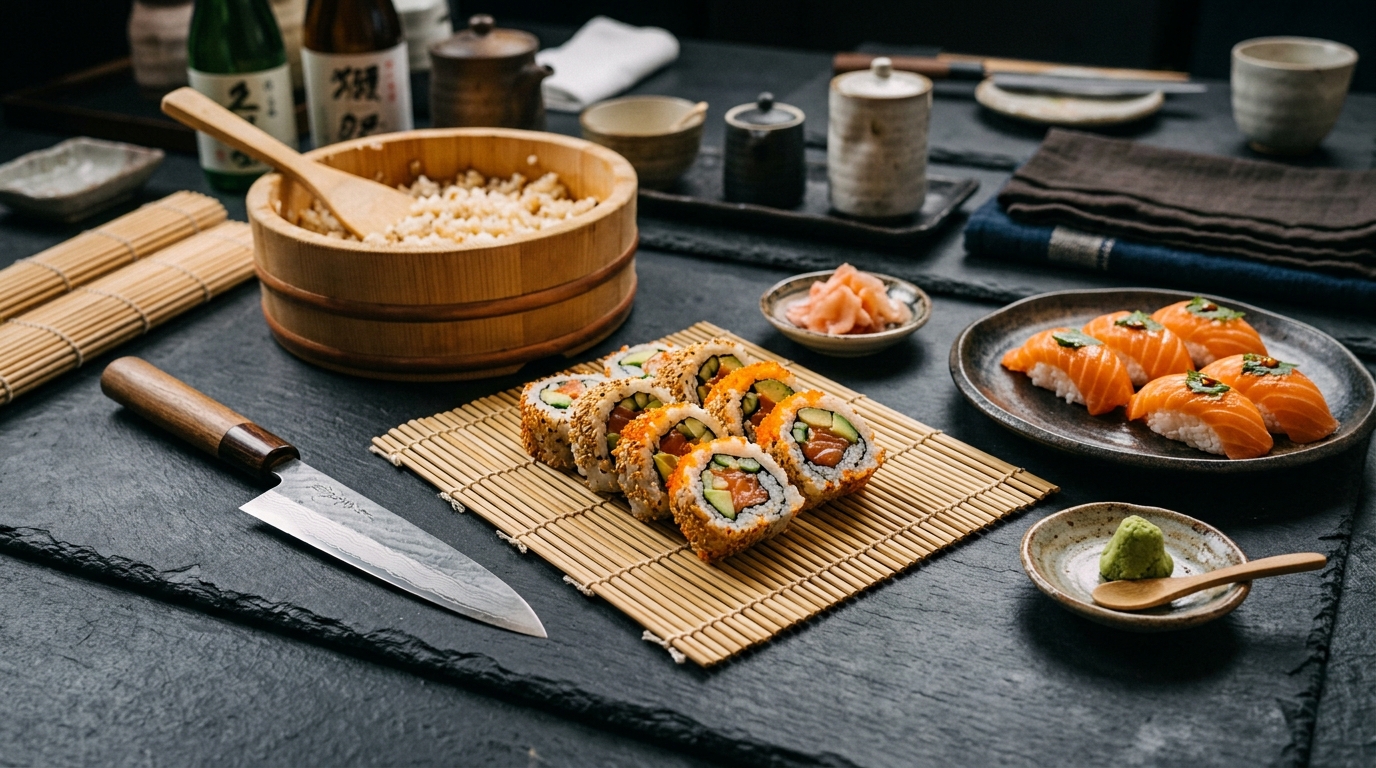
Lay out all kit components on a dry, sanitized workstation. Rinse bamboo mats in lukewarm water (never use dishwashers for untreated bamboo) and towel dry. Pro-Tip: Wrap your bamboo rolling mats in a sheet of cling film (plastic wrap); this prevents starchy rice grains from wedging into the bamboo slats and makes cleanup an absolute breeze.
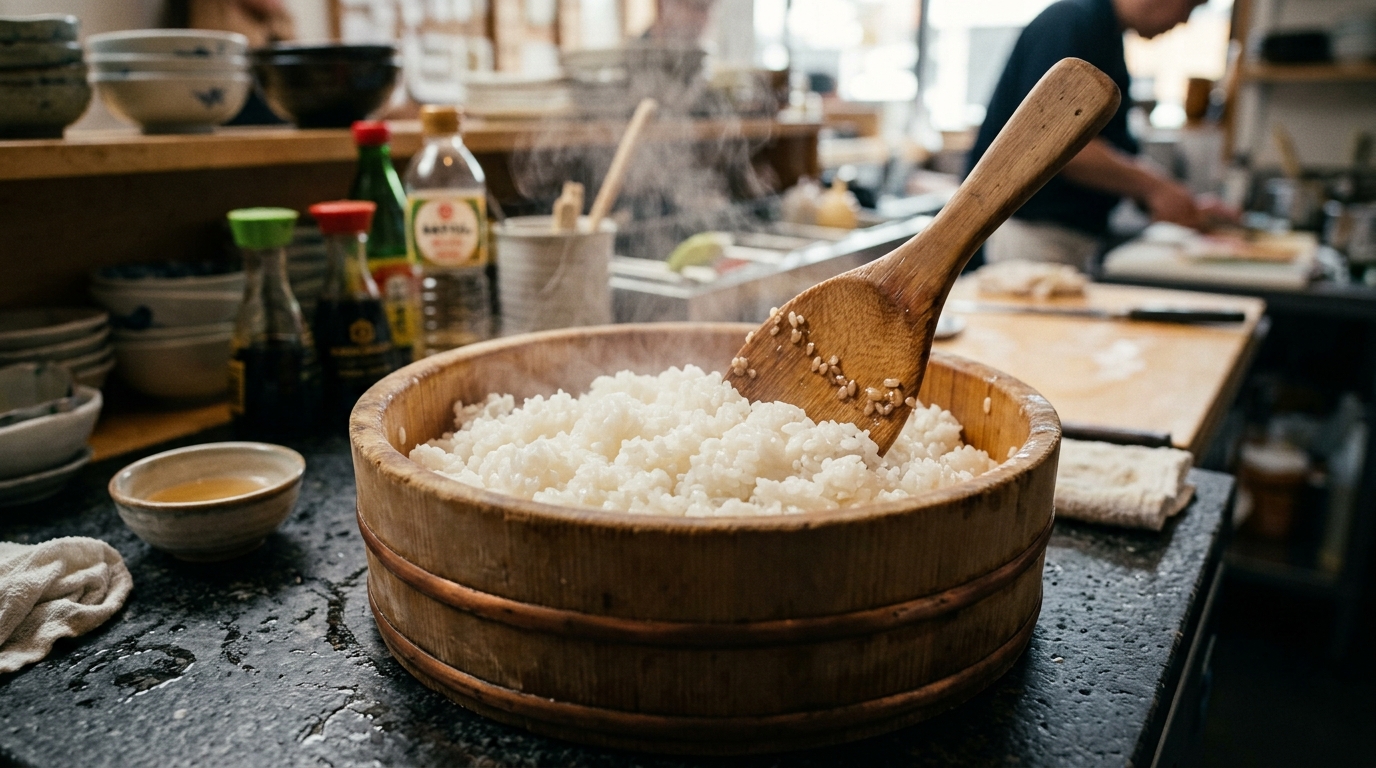
Step 2: Cook & Season Authentic Sushi Rice (Shari)
Wash short-grain Japanese sushi rice (such as Koshihikari or Calrose) vigorously in cold water until the rinse water runs clear. Cook in a solid pot or rice cooker. While piping hot, transfer to a wide wooden bowl or hangiri tub. Gently fold in your seasoned vinegar mixture (rice vinegar, sugar, sea salt) using a cutting motion with your wooden paddle so you don’t mash the grains. Allow to cool to comfortable body temperature (~95°F / 35°C).
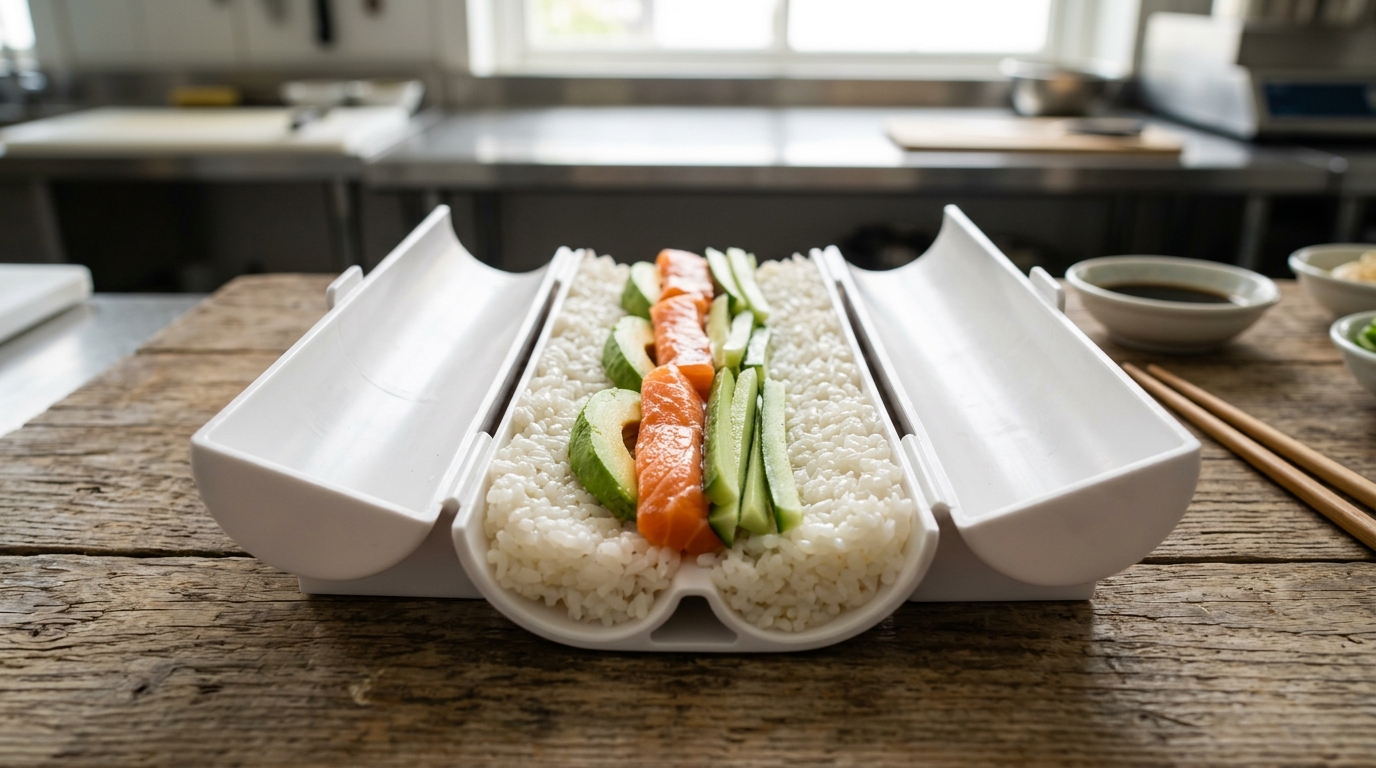
Step 3: Pack the Sushi Bazooka Mold
Lightly oil or dampen the inner channels of the sushi bazooka with seasoned water (tezu). Fill both halves of the tube evenly with seasoned sushi rice, pressing a slight channel down the center of each side with the rod. Lay your filling batons (fresh sashimi salmon, ripe avocado, crisp seedless cucumber matchsticks) snugly along the groove.
Step 4: Extrude the Cylindrical Roll onto Nori
Close the bazooka, lock the latches, insert the plunger rod, and screw on the end cap. Turn the plunger handle clockwise 4–6 times to firmly compress the contents into a cohesive cylinder. Remove the front cap, position the tube at the front edge of a crisp nori sheet (rough side facing up), and smoothly plunge the compressed rice log directly onto the seaweed.
Step 5: Roll & Cinch with the Bamboo Mat (Makisu)
Roll the nori sheet tightly over the extruded cylinder. Lightly moisten the far 1/2-inch border of the nori with cold water using your fingertip to seal the seam. Wrap your plastic-covered bamboo mat snugly over the roll and apply gentle, uniform pressure along the entire length to create a perfectly circular cross-section with a locked seam.
Step 6: Slice with a Damp Razor Blade
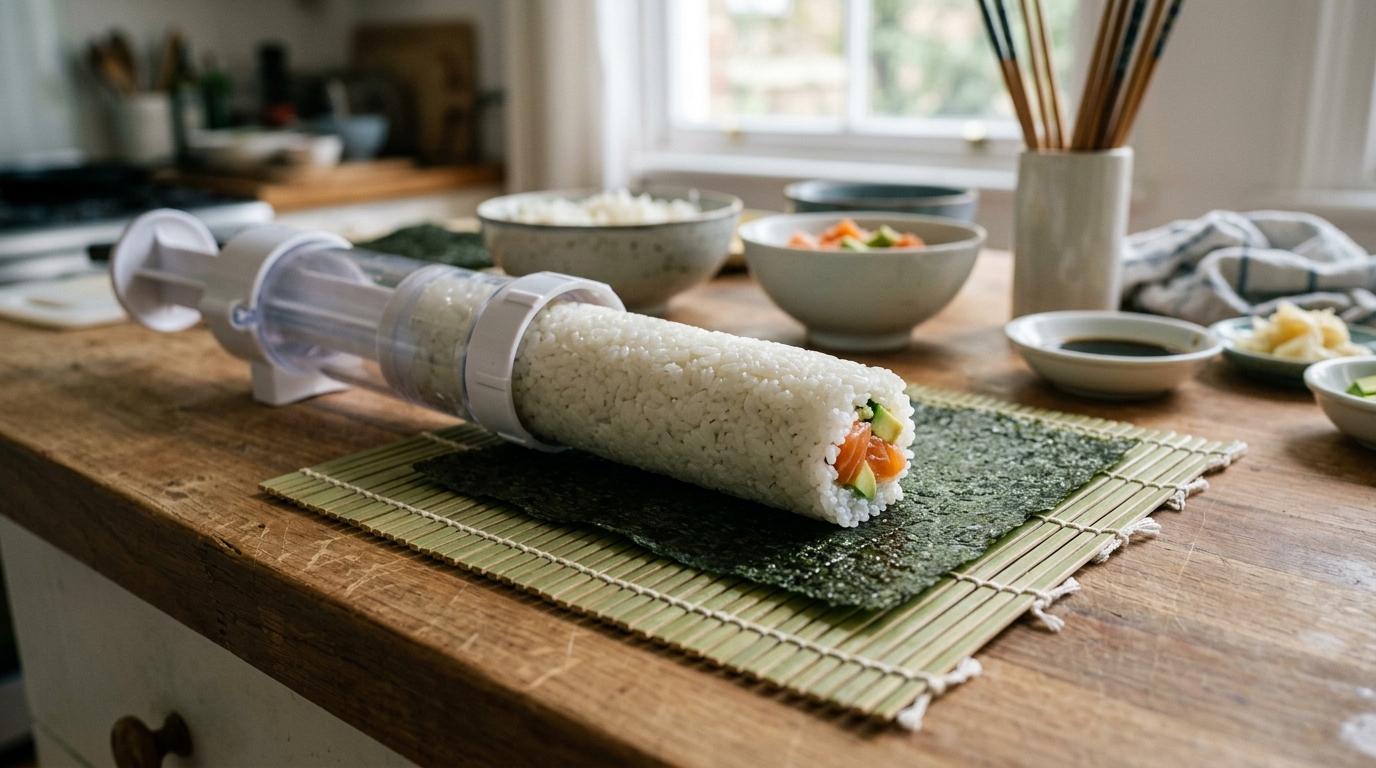
Never saw back and forth through sushi. Use a damp chef knife or the slicing knife included in your kit. Dip the tip of the blade into a bowl of cold water, tilt the knife upright so a drop trickles down the cutting edge, and slice through the roll in one smooth pulling stroke from heel to tip. Wipe the blade clean with a damp kitchen towel after every 2 slices to prevent starch buildup.
Step 7: Plate & Present Your Feast
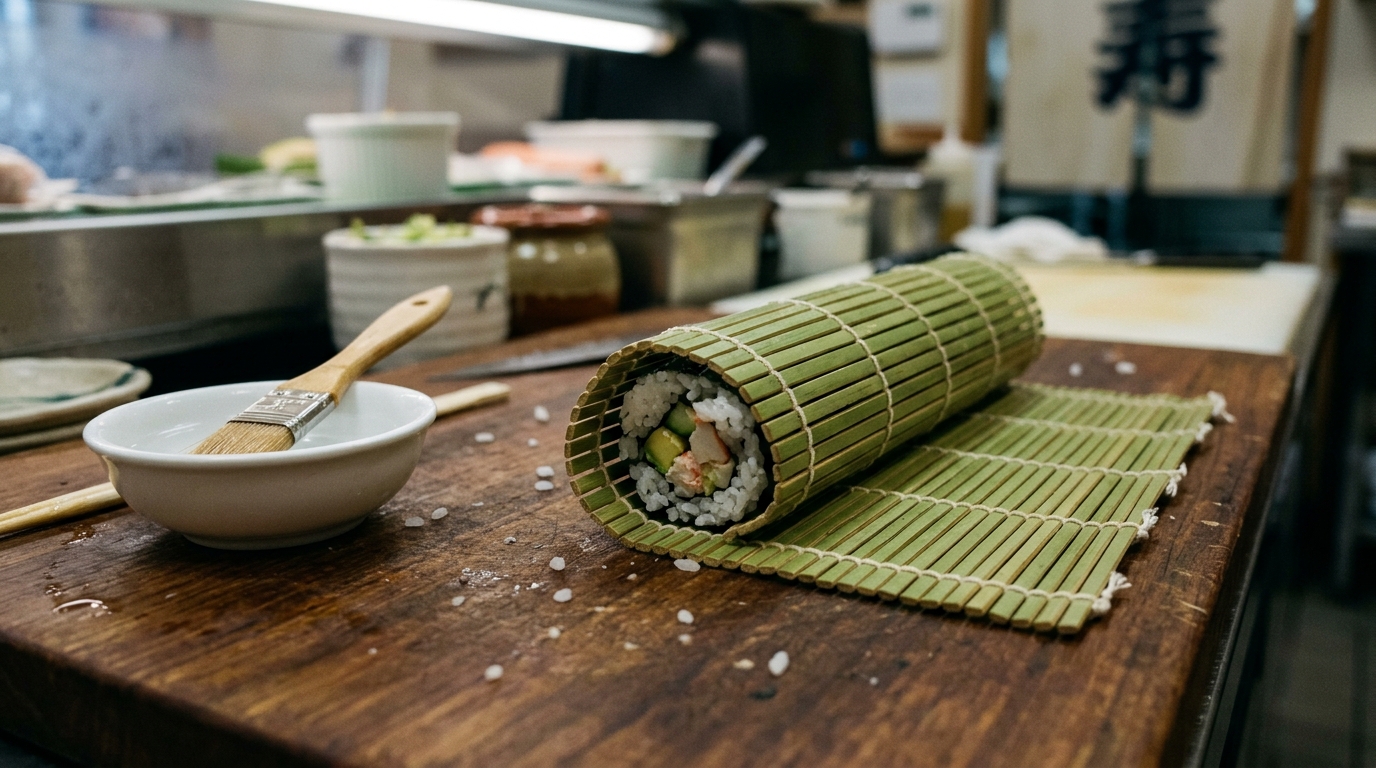
Arrange your fresh maki rounds on a dark slate or ceramic platter. Crown uramaki (inside-out rolls) with crunchy flying fish roe from our Tobiko guide or spicy mayo drizzle. Serve with a folded rosette of pickled ginger (gari), a dollop of pungent wasabi, and a low-sodium tamari soy sauce.
Pro Tips & Essential Techniques
Mastering sushi at home comes down to understanding three elemental kitchen physics:
- ✓ Keep Tezu Water Handy: Starch will adhere aggressively to dry hands and plastic surfaces. Keep a small bowl of water with a splash of rice vinegar
- ✓ The 45-Degree Cling Wrap Trick: Before using any bamboo makisu rolling mat, wrap it in commercial plastic wrap. Stretch the plastic tightly and tuck
- ✓ Never Compress by Squeezing Downwards: When using traditional rolling mats, apply curling circular tension, never straight downward crushing force.
- ✓ Pair with Authentic Garnishes: Elevate your homemade rolls by stocking your pantry with genuine orange flying fish roe (tobiko) for acoustic pop, and
Frequently Asked Questions (FAQs)
Q1: What is the single easiest sushi-making kit for total beginners?
👉 Without question, the Delamu 20-in-1 Kit is the most forgiving. Its mechanical bazooka cylinder compresses rice and fillings with uniform density, virtually eliminating rolls that fall apart when sliced.
Q2: Can I use regular long-grain white rice or jasmine rice for sushi?
👉 No. Long-grain varieties lack the amylopectin starch required for stickiness. Always purchase authentic Japanese short-grain rice (labeled as Sushi Rice, Koshihikari, or Calrose).
Q3: Is the sushi bazooka difficult to wash?
👉 Quite the opposite! The food-grade polymer tube disassembles into two halves with removable caps. A 30-second rinse under hot running water with mild dish soap cleans it thoroughly.
Q4: How do I store leftover sushi rolls?
👉 Sushi is best consumed fresh within 3 hours. If refrigerating, wrap tightly in cling film. Note that refrigerated rice starch undergoes retrogradation and hardens; microwaving the roll for 10–12 seconds restores rice pliability without cooking raw fish fillings.
Explore More Popular Guides on FoodJot
Continue your global culinary adventure with these fan-favorite tested guides and restaurant copycats:
- 🍣 Tobiko: Everything You Need to Know About Fish Roe — Master the colors, acoustic pop, and recipes of Japanese flying fish roe.
- 🌶️ How to Make Tabasco Sauce Recipe — The 3-ingredient oak-barrel secret to authentic Louisiana hot sauce.
- 🍗 Dave’s Hot Chicken Recipe Copycat — Recreate Nashville hot tenders with that signature spiced crust.
- 🍲 Sopa de Mondongo: Latin American Tripe Soup — Traditional hearty stew simmered with corn and yucca.
- 🍬 Homemade Freeze-Dried Candy Guide — How to make crunchy viral sweets at home.
- 🍩 Best Mini Donut Makers Tested — Top Amazon picks for golden mini donuts in minutes.
- 🇫🇷 Lyon-Style Fried Tripe (Tablier de Sapeur) — Authentic crispy French bistro favorite.
🍣 Complete Your Homemade Japanese Feast
Take your homemade sushi skills further with these essential tools and authentic toppings:
- 📖 Creamy Tobiko Sauce Pasta Recipe (Japanese Fusion DIY) — Learn how to use fresh flying fish roe for sushi rolls and rich fusion pasta.
- 📖 Best Kitchen Knife Sets for Precision Slicing — Razor-sharp Japanese santoku and chef knives for clean sushi cuts.
- 📖 Bamboo Steamers for Authentic Dim Sum & Dumplings — Traditional tiered bamboo steaming guide for gyoza, bao, and sides.