
Affiliate Disclosure: This post may contain affiliate links. If you make a purchase through these links, we may earn a commission at no extra cost to you. For more information, please see our affiliate disclosure.
Ah, Hollandaise. The silky, tangy, buttery crown jewel of Eggs Benedict and a myriad of other dishes. When it’s perfect, it’s a culinary dream. When it breaks, however, it can feel like a kitchen nightmare, leaving you with a curdled mess instead of a luxurious emulsion. Many home cooks shy away from making this classic French sauce for this very reason, but what if we told you that understanding the ‘why’ behind a broken Hollandaise is the first step to mastering it, and that saving it can be as quick as 60 seconds?
Fear not, fellow food enthusiasts! This comprehensive guide will demystify the art of Hollandaise, revealing the common culprits behind its collapse and equipping you with a simple, effective rescue mission. Get ready to whip up velvety smooth Hollandaise with confidence, turning kitchen frustration into culinary triumph.
Ingredients
- 3 large egg yolks
- 1/2 cup (1 stick or 113g) unsalted butter, melted and kept warm
- 1 tablespoon fresh lemon juice
- 1/4 teaspoon salt, or to taste
- Pinch of cayenne pepper (optional, but recommended for a subtle kick)
- 1-2 tablespoons hot water (for consistency, if needed)
Product Spotlight
Step-by-Step Instructions
Making Perfect Hollandaise from Scratch
Step 1: Prepare Your Workspace Set up a double boiler (bain-marie). You can do this by fitting a heatproof bowl snugly over a saucepan containing about an inch or two of simmering water. Ensure the bottom of the bowl does not touch the water. Have all your ingredients measured and ready. Melt your butter and keep it warm, but not boiling hot. The ideal temperature for your melted butter is around 120-130°F (49-54°C).

Step 2: Whisk the Yolks In the heatproof bowl, combine the egg yolks, lemon juice, and salt. Whisk vigorously with a whisk until the mixture is light in color and slightly thickened. This usually takes about 1-2 minutes. The lemon juice helps to stabilize the yolks.

Step 3: Cook the Yolks Over Heat Place the bowl over the simmering water. Continue whisking constantly and vigorously. The mixture will gradually thicken and become pale yellow. This process is crucial for cooking the yolks without scrambling them. Look for the sauce to coat the back of a spoon, leaving a clear trail when you run your finger through it. This typically takes 3-5 minutes. Immediately remove the bowl from the heat as soon as it reaches this consistency. Overcooking is a common reason for separation, as noted by Home Cuisine Delights.

Step 4: Slowly Emulsify with Butter While continuously whisking the egg yolk mixture, slowly drizzle in the warm melted butter, a few drops at a time at first, then in a very thin, steady stream. It is absolutely essential to add the butter slowly to allow the emulsion to form properly. If you add it too quickly, the sauce will break. Incorporate all the butter, and the sauce should become thick and glossy. This slow addition and constant whisking is key to preventing a broken sauce, as highlighted by Lezata.

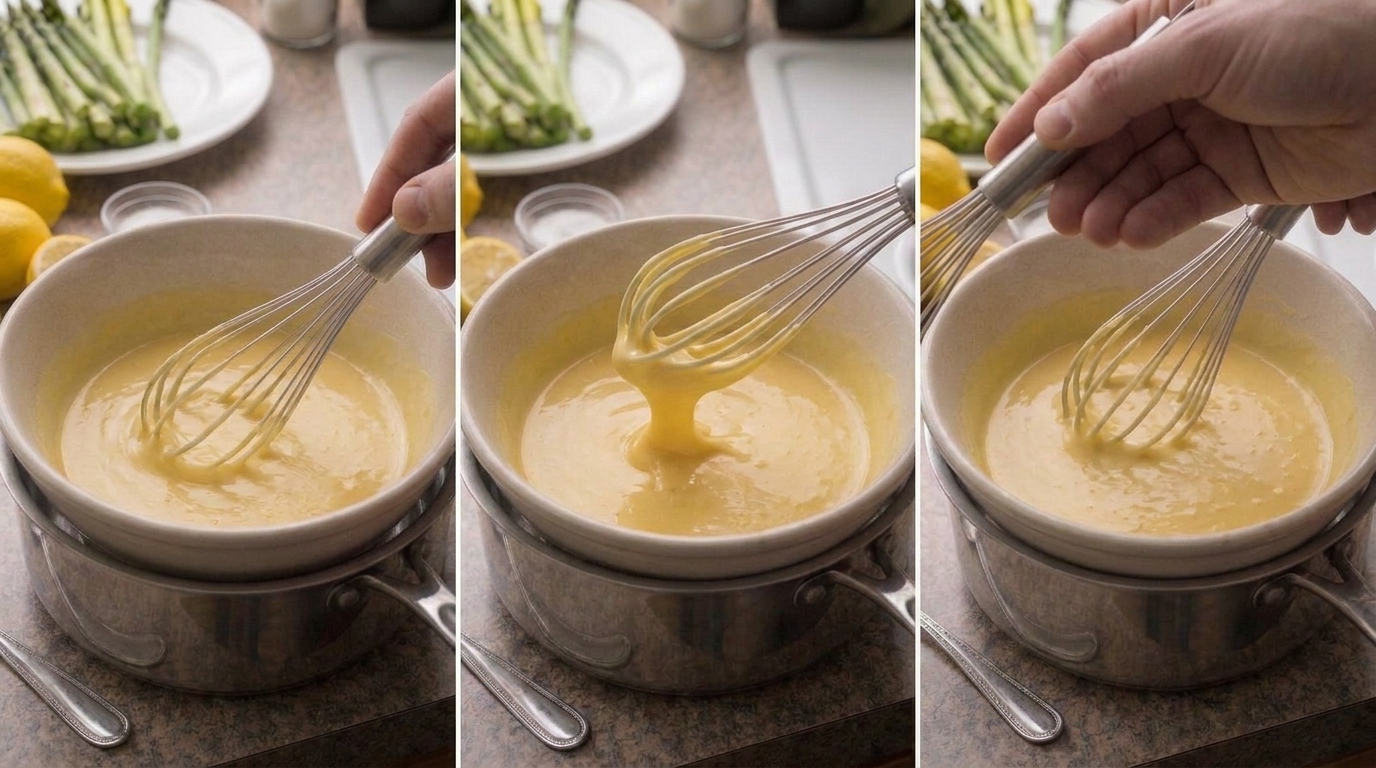
Step 5: Season and Adjust Stir in the cayenne pepper, if using. Taste and adjust salt and lemon juice as needed. If the sauce is too thick, whisk in a teaspoon or two of hot water until it reaches your desired consistency. Serve immediately.

The 60-Second Save Method for Broken Hollandaise
Don’t despair if your Hollandaise breaks! Whether it’s curdled, oily, or watery, this quick fix, often referred to as the ‘ice cube method’ or ‘new yolk method’ by sources like The Random Recipe, can bring it back to life.
Step 1: Start Fresh (Kind Of) In a clean, separate bowl (or a clean saucepan if using a stovetop method), add 1-2 tablespoons of hot water (for a warm sauce) or 1/2 teaspoon of Dijon mustard (for a tangier flavor). For a cold shock method, you can start with a fresh egg yolk and a teaspoon of cold water or even an ice cube, as suggested by Salt and Olive.
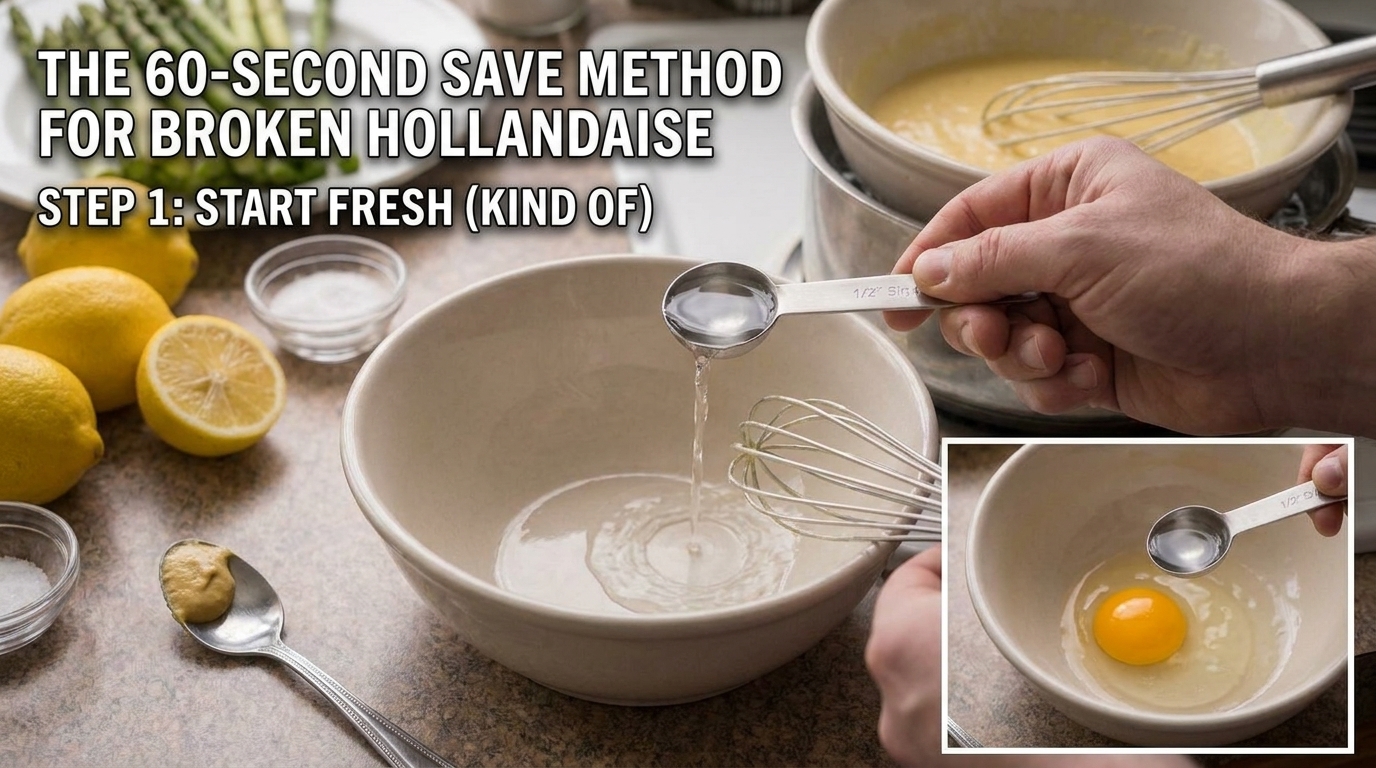
Step 2: Whisk Vigorously Begin whisking the water/mustard or fresh yolk vigorously. If using the hot water method, place the bowl over the double boiler again (ensure water is simmering, not boiling). If using a fresh yolk, whisk it alone first.
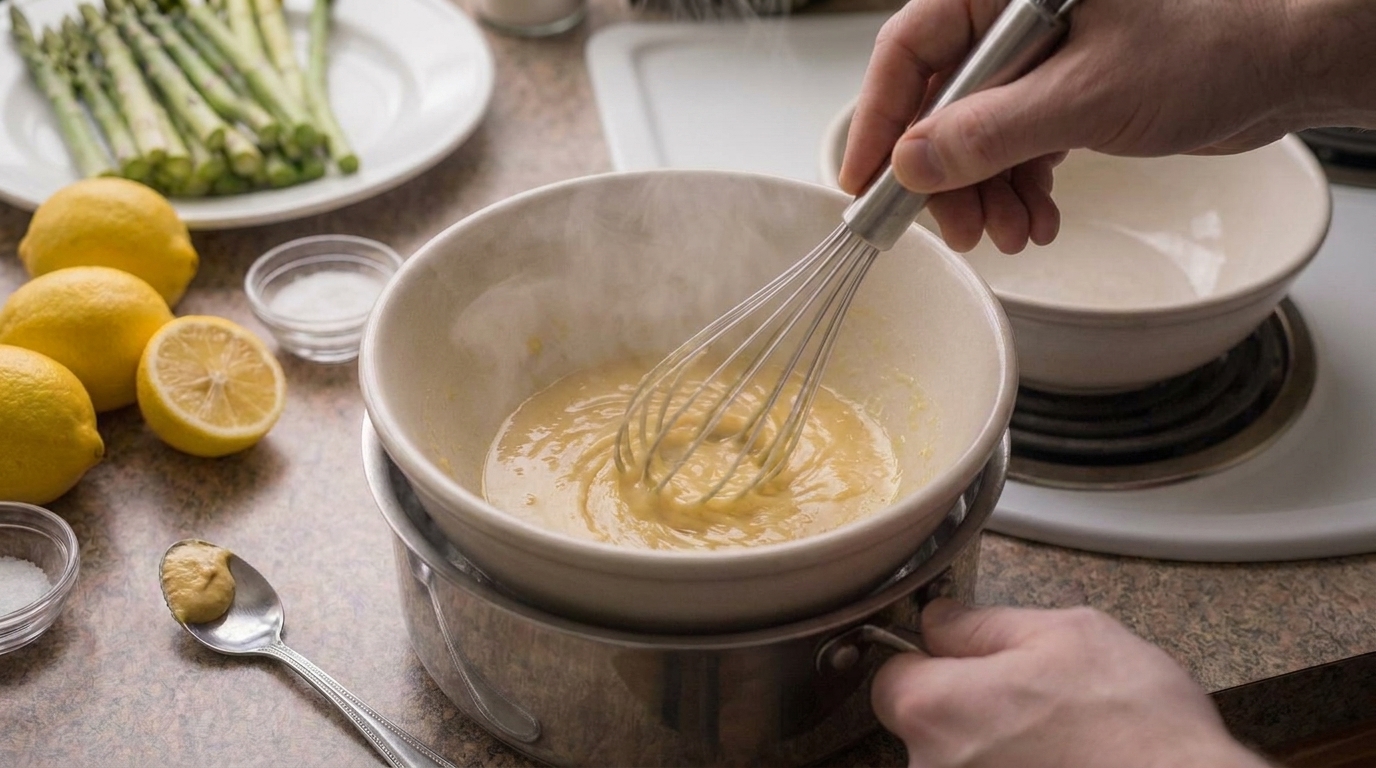
Step 3: Slowly Incorporate the Broken Sauce While continuously whisking, slowly drizzle the broken Hollandaise sauce into the hot water/mustard or fresh yolk mixture, a teaspoon at a time initially. Continue whisking constantly. As the broken sauce is incorporated, it will begin to emulsify again. Once a stable emulsion starts to form, you can add the broken sauce a little faster, but still in a steady stream.
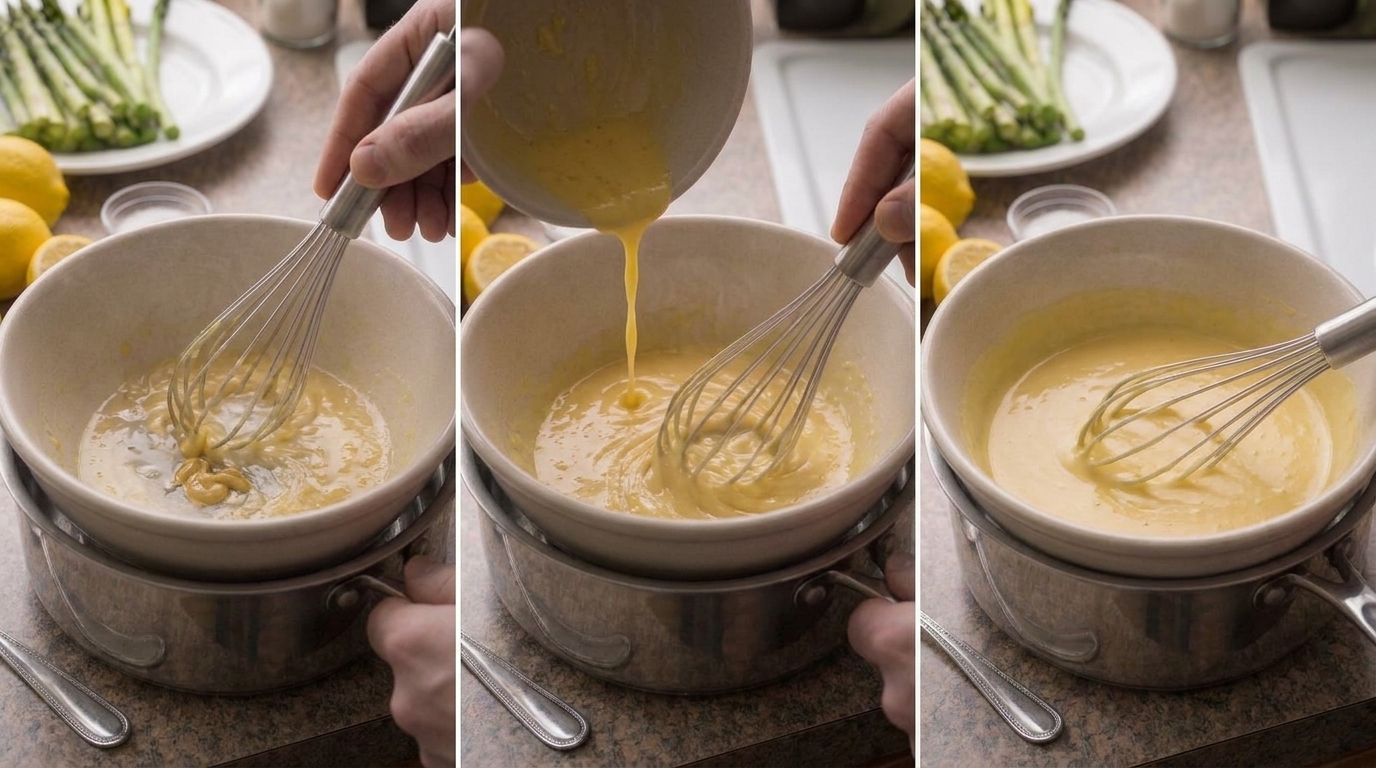
Step 4: Re-emulsify and Finish Keep whisking until all the broken sauce is smooth and creamy. This process should take about 30-60 seconds once you start adding the broken sauce. Adjust seasoning and consistency as needed. If it’s still too thick, a tiny bit more hot water can help. Your Hollandaise is now rescued and ready to serve!
Why You’ll Love This Foolproof Hollandaise Method
You’ll absolutely adore this Hollandaise guide because it empowers you with both prevention and cure! No more culinary anxiety when preparing this classic sauce. Our detailed steps ensure you understand the delicate balance required for a perfect emulsion, from precise temperature control to the art of slow butter incorporation. But more than just prevention, the 60-second save method is a game-changer. It transforms potential kitchen disasters into quick, satisfying triumphs, making you feel like a pro chef. Enjoy perfectly smooth, rich Hollandaise every single time, enhancing your favorite dishes like Eggs Benedict, asparagus, or even seafood. You might also enjoy our Bearnaise Sauce Recipe for another classic French sauce.
The Reason Your Hollandaise Always Breaks — And the 60-Second Save Method
Ingredients
- 3 large egg yolks
- 1/2 cup (1 stick or 113g) unsalted butter, melted and kept warm
- 1 tablespoon fresh lemon juice
- 1/4 teaspoon salt, or to taste
- Pinch of cayenne pepper (optional)
- 1-2 tablespoons hot water (for consistency, if needed)
Instructions
- Set up a double boiler (bain-marie). You can do this by fitting a heatproof bowl snugly over a saucepan containing about an inch or two of simmering water. Ensure the bottom of the bowl does not touch the water. Have all your ingredients measured and ready. Melt your butter and keep it warm, but not boiling hot. The ideal temperature for your melted butter is around 120-130°F (49-54°C).
- In the heatproof bowl, combine the egg yolks, lemon juice, and salt. Whisk vigorously with a whisk until the mixture is light in color and slightly thickened. This usually takes about 1-2 minutes. The lemon juice helps to stabilize the yolks.
- Place the bowl over the simmering water. Continue whisking constantly and vigorously. The mixture will gradually thicken and become pale yellow. This process is crucial for cooking the yolks without scrambling them. Look for the sauce to coat the back of a spoon, leaving a clear trail when you run your finger through it. This typically takes 3-5 minutes. Immediately remove the bowl from the heat as soon as it reaches this consistency. Overcooking is a common reason for separation, as noted by Home Cuisine Delights.
- While continuously whisking the egg yolk mixture, slowly drizzle in the warm melted butter, a few drops at a time at first, then in a very thin, steady stream. It is absolutely essential to add the butter slowly to allow the emulsion to form properly. If you add it too quickly, the sauce will break. Incorporate all the butter, and the sauce should become thick and glossy. This slow addition and constant whisking is key to preventing a broken sauce, as highlighted by Lezata.
- Stir in the cayenne pepper, if using. Taste and adjust salt and lemon juice as needed. If the sauce is too thick, whisk in a teaspoon or two of hot water until it reaches your desired consistency. Serve immediately.
FAQ Section
What causes Hollandaise sauce to break?
Can I make Hollandaise ahead of time?
What if my Hollandaise is too thick?
Conclusion
Mastering Hollandaise sauce is a true culinary achievement, and with the insights and techniques shared here, you’re well on your way. Remember the golden rules: controlled heat, slow butter incorporation, and constant whisking. But even if the unexpected happens, our 60-second save method ensures that a broken sauce is never a lost cause. Embrace the challenge, enjoy the process, and delight in the rich, velvety reward. Now you can confidently prepare this classic French sauce for any occasion, impressing your guests and satisfying your own gourmet cravings. For more cooking tips and recipes, explore Food Jot Home.