Affiliate Disclosure: This post may contain affiliate links. If you make a purchase through these links, we may earn a commission at no extra cost to you. For more information, please see our affiliate disclosure.
Panda Express Orange Chicken Sauce — Why the Bottled Version Disappoints (And the Real Recipe)
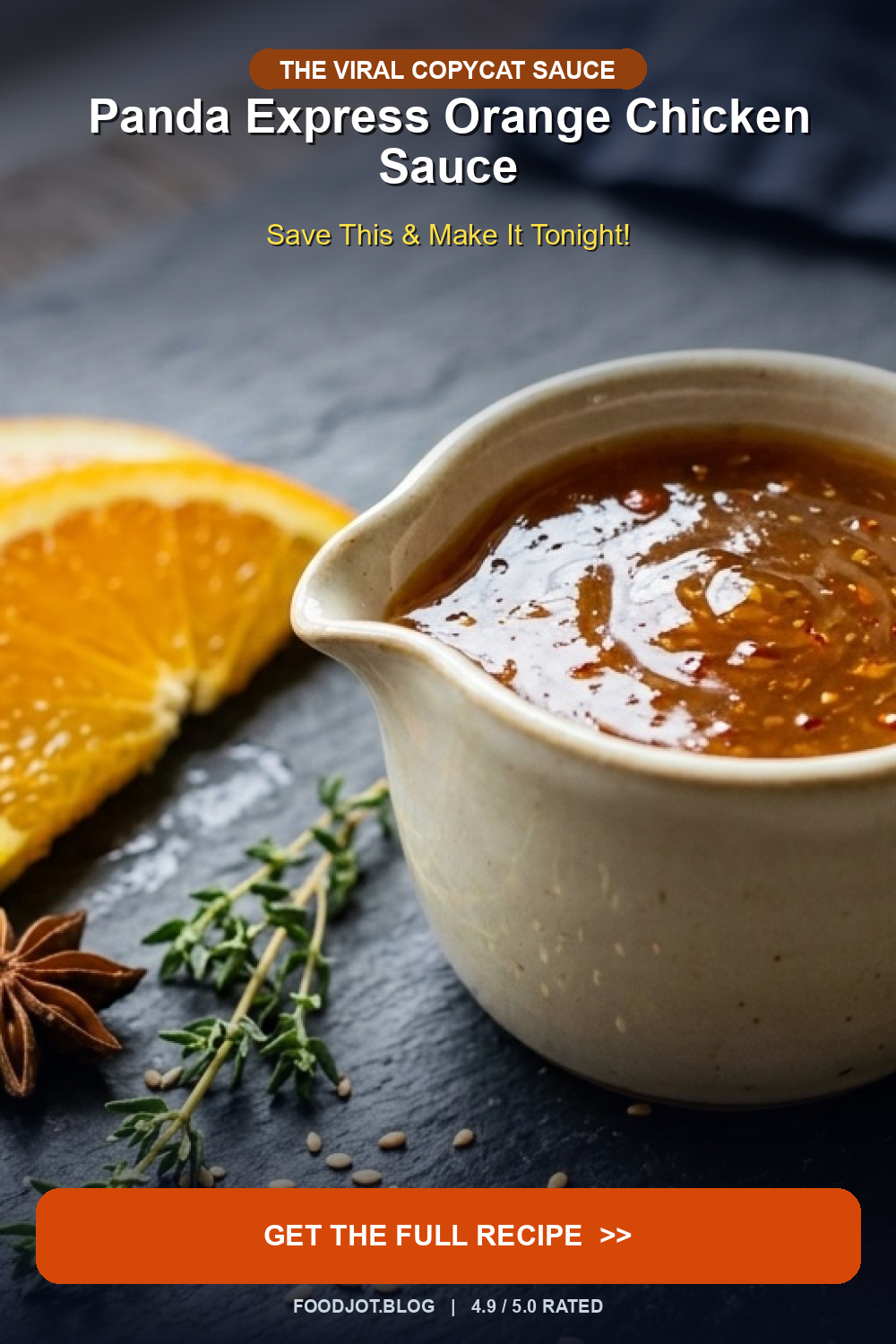
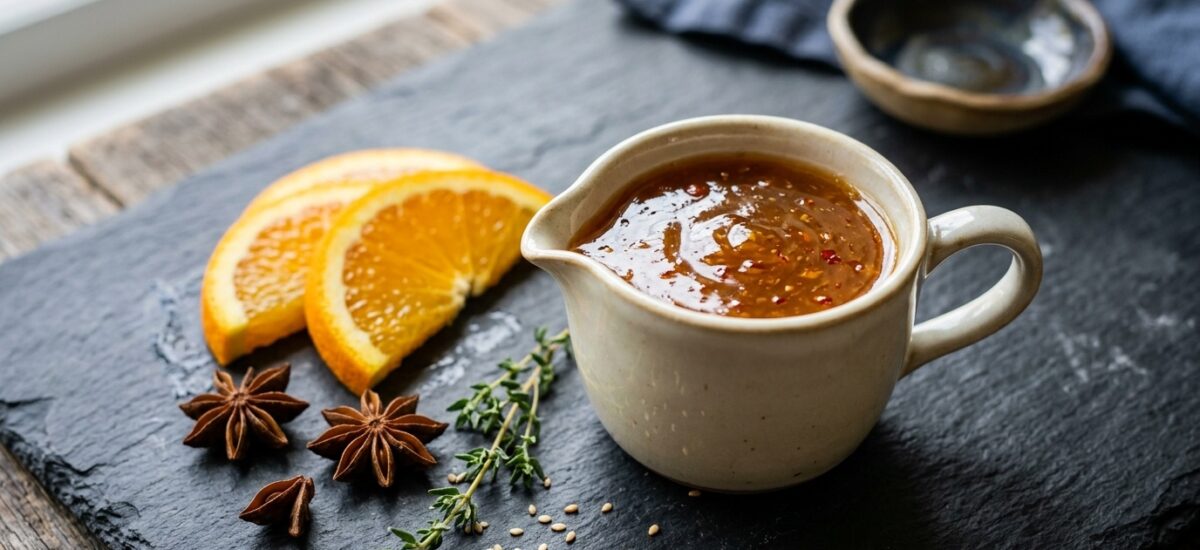
Panda Express Orange Chicken Sauce is arguably the most recognizable and addictive culinary glaze in American Chinese dining. First developed in 1987 by Panda Express Executive Chef Andy Kao at an experimental location in Oahu, Hawaii, this glossy, citrus-infused glaze redefined fast-casual Chinese cuisine across North America. Combining the bold Hunan tradition of dried chili peppers and garlic with vibrant Polynesian orange sweetness, Kao created a multi-layered sauce that coats crispy battered chicken in a mirror-like lacquer. Today, Panda Express serves over 115 million pounds of Orange Chicken annually, cementing its status as an undeniable cultural juggernaut.
Driven by frantic consumer demand to recreate the magic at home, supermarkets nationwide now stock commercial glass bottles labeled “Panda Express Orange Sauce.” Yet home cooks who purchase these retail bottles inevitably walk away profoundly disappointed. Instead of the bright, punchy, wok-caramelized citrus explosion found under the restaurant heat lamps, the bottled sauce pours out thick, cloying, dull, and overwhelmingly synthetic. Why does the supermarket bottle fall so terribly short of the restaurant counter? Just as we decoded the exact commercial science behind diner-style fluff in our fluffy IHOP Buttermilk Pancakes, the restaurant-grade cheese emulsion in our Chili’s Queso Dip Recipe, the secret Thousand Island dressing ratio in our Applebee’s Oriental Chicken Salad, the golden drop crumb in our Red Lobster Cheddar Bay Biscuits Recipe, and the crisp shells of our Taco Bell Mexican Pizza Recipe, this comprehensive culinary investigation exposes why commercial bottling ruins Orange Sauce—and reveals the real 15-minute scratch recipe that delivers genuine wok-fired perfection!
The 4 Critical Reasons Why Bottled Panda Express Sauce Disappoints
To understand why store-bought bottles fail to satisfy, you must look closely at industrial food manufacturing and the harsh reality of ambient shelf stabilization:
- 1. Industrial High Fructose Corn Syrup vs. Real Caramelized Sugars: The primary ingredient in retail bottled Orange Sauce is high fructose corn syrup (HFCS), followed by water and modified food starch. HFCS provides flat, one-dimensional sweetness with an unpleasantly syrupy aftertaste. In contrast, authentic restaurant-style Orange Chicken sauce relies on a calibrated dual-sugar foundation of granulated cane sugar and rich dark brown sugar. When heated over a fiery wok, the molasses in brown sugar undergoes intense Maillard browning and sugar caramelization, developing deep toffee undertones that HFCS simply cannot replicate.
- 2. Preservatives Destroy Citrus Freshness: Fresh orange juice contains delicate volatile aromatic esters and citric acids that oxidize within hours. To make a shelf-stable sauce that can sit on room-temperature grocery store shelves for 18 months, food processors pasteurize the sauce at high temperatures and pump it full of sodium benzoate, potassium sorbate, and artificial citric acid. This aggressive thermal processing burns away genuine citrus aromatics, leaving a dead, overly sour vinegar taste devoid of fresh fruit fragrance.
- 3. Missing Essential Citrus Oils (Limone & Terpenes): The genuine “orange” punch at Panda Express does not come purely from juice; it comes from orange zest and cold-pressed citrus oil. The peel of an orange is rich in d-limonene, an intensely fragrant terpene oil stored in microscopic surface glands. In the restaurant wok, these oils aerosolize in sizzling heat, perfuming the entire sauce. Bottled sauces omit real citrus zest entirely, substituting artificial “natural orange flavoring” that tastes like candy syrup rather than real fruit.
- 4. Dehydrated Powders vs. Freshly Sautéed Aromatics: Commercial bottled sauces use dehydrated garlic powder and dried ginger extract to prevent microbial spoilage. Authentic Chinese stir-fry cooking demands that minced fresh garlic cloves, finely grated fresh ginger root, and cracked red chili flakes are briefly bloomed in hot toasted sesame oil. This rapid 30-second sauté releases allicin and gingerol directly into the cooking oil, creating the aromatic flavor backbone that makes restaurant Orange Chicken utterly irresistible.
The Chemistry of the Perfect Restaurant Glaze (Wok Hei & Cornstarch Science)
Recreating the authentic Panda Express glaze requires mastering two fundamental culinary principles: starch gelatinization and rapid reduction.
At the restaurant, line cooks pour the liquid sauce into screaming-hot commercial woks operating at 100,000 BTUs. This blistering heat produces Wok Hei—the elusive “breath of the wok”—which lightly chars microscopic oil droplets and partially caramelizes the sugars without burning. At home, using a heavy-gauge carbon steel wok, such as the Joyce Chen Classic Series Carbon Steel Wok, allows you to store maximum thermal energy on a standard residential range.
Furthermore, the iconic mirror-sheen gloss of Orange Chicken sauce is governed by cornstarch gelatinization. Unlike flour or roux-thickened gravies, cornstarch consists purely of amylose and amylopectin molecules. When heated past 203°F (95°C) in the presence of acidic liquid, these starch granules swell and burst, trapping water in a clear, highly viscous colloid. To maintain that signature glass-like transparency, the cornstarch must be boiled vigorously for at least 60 seconds. Under-cooking leaves the sauce cloudy and starchy, while over-cooking can shear the starch chains and thin the glaze. Our precise timing guarantees a thick, sticky coating that clings stubbornly to fried chicken without turning soggy.
Product Spotlight
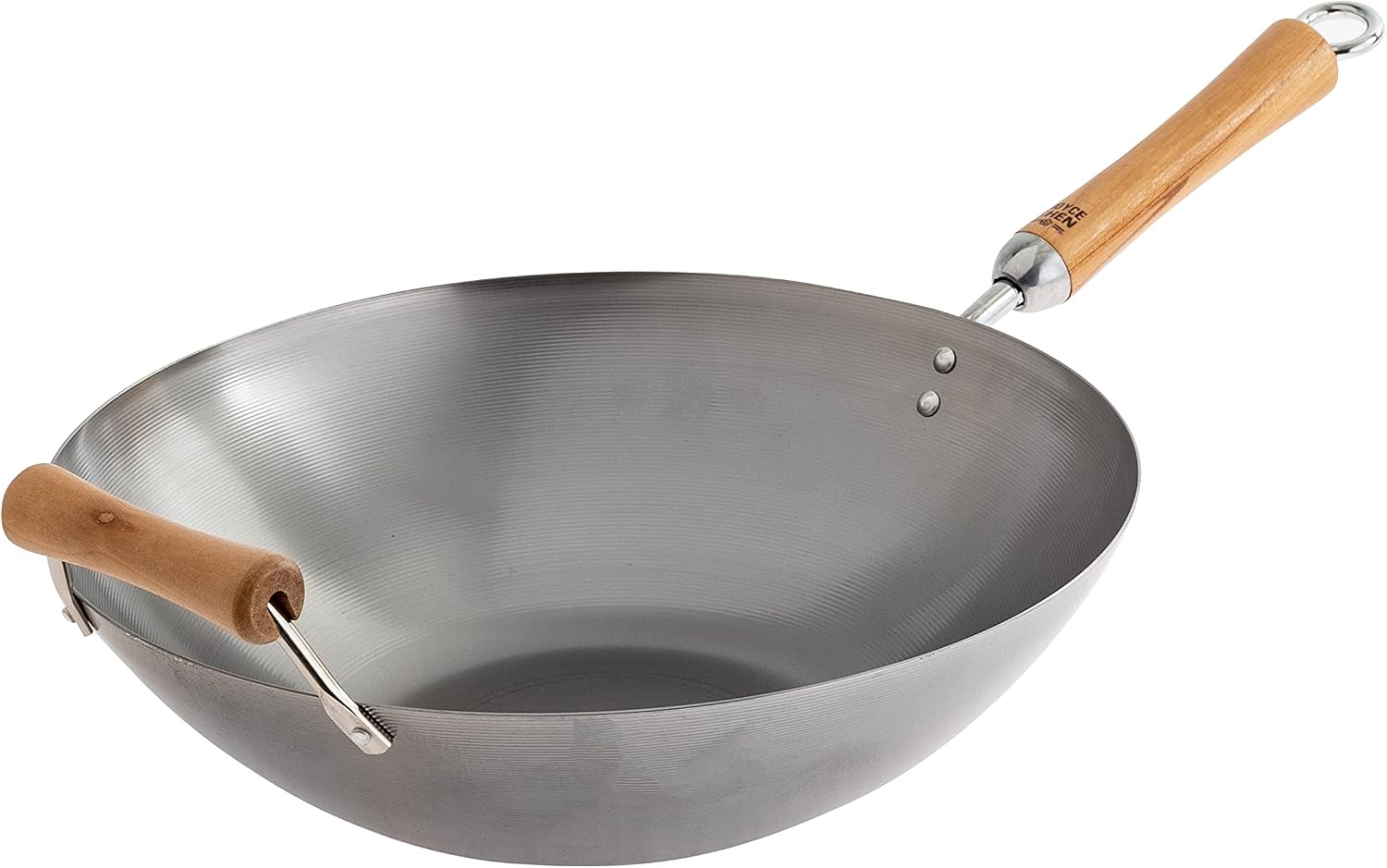
Joyce Chen Classic Series 14-Inch Carbon Steel Wok
$39.99Heavy-gauge 1.5mm commercial carbon steel wok achieves the authentic high-heat “Wok Hei” breath required to reduce and caramelize Panda Express orange glaze without scorching. Ergonomic birch handles and flat bottom designed for home stovetops.
Buy on AmazonIngredients for Authentic Panda Express Orange Chicken Sauce
To replicate the authentic restaurant flavor profile, assemble these fresh, wholesome pantry and produce items. This recipe yields approximately 1 ½ cups of thick glaze—enough to generously coat 1.5 to 2 pounds of crispy chicken bites:
The Fresh Citrus & Sugar Foundation:
- ¾ cup fresh orange juice: Freshly squeezed from 2 to 3 large navel or Valencia oranges. Avoid shelf-stable boxed orange juice from concentrate, which contains added preservatives and cooked flavor notes.
- 1 tablespoon freshly grated orange zest: Zested finely with a microplane grater before juicing. This provides the essential citrus terpene oils that bottled sauces sorely lack.
- ⅓ cup granulated white cane sugar: Provides clean, sparkling sweetness that balances the sharp vinegars.
- ¼ cup dark brown sugar (packed): Delivers essential molasses depth and accelerates rich caramelized color.
The Savory Umami & Acid Balancers:
- 3 tablespoons light soy sauce: Provides salty, fermented savory umami backbone without overpowering the golden orange hue.
- 1 teaspoon dark soy sauce: Gives the sauce its iconic deep amber-mahogany restaurant luster.
- ¼ cup rice vinegar (unseasoned): Imparts clean, mild, authentic Asian acidity.
- 2 tablespoons distilled white vinegar: Provides the signature sharp, mouth-watering restaurant “tang” that cuts through the rich fried batter.
- 2 tablespoons Shaoxing Chinese cooking wine: The secret restaurant ingredient! Adds profound aromatic complexity and cuts through sugary sweetness. Dry sherry makes an acceptable substitute.
The Aromatic Sizzle & Heat:
- 1 tablespoon toasted sesame oil: Divided into two uses—half for blooming the aromatics and half drizzled at the very end for an intoxicating nutty perfume.
- 3 cloves fresh garlic (finely minced): Must be fresh cloves; skip jarred minced garlic which tastes sour.
- 1 tablespoon fresh ginger root (grated or finely minced): Adds unmistakable spicy warmth and zesty bite.
- ½ to 1 teaspoon crushed red pepper flakes: Adjust to taste. Panda Express Orange Chicken has a perceptible spicy kick that balances the sweet glaze.
- 2 tablespoons green onions (scallions, sliced on the bias): Divided for cooking and fresh garnish.
The Glass-Gloss Thickener (Cornstarch Slurry):
- 2 tablespoons cornstarch: Pure cornstarch creates a crystal-clear, clingy mirror glaze.
- 2 tablespoons cold tap water: Must be cold water to prevent cornstarch from clumping into starch gelatin lumps.
Step-by-Step Instructions for Panda Express Orange Chicken Sauce
Step 1: Whisk the Liquid Citrus Sauce Foundation
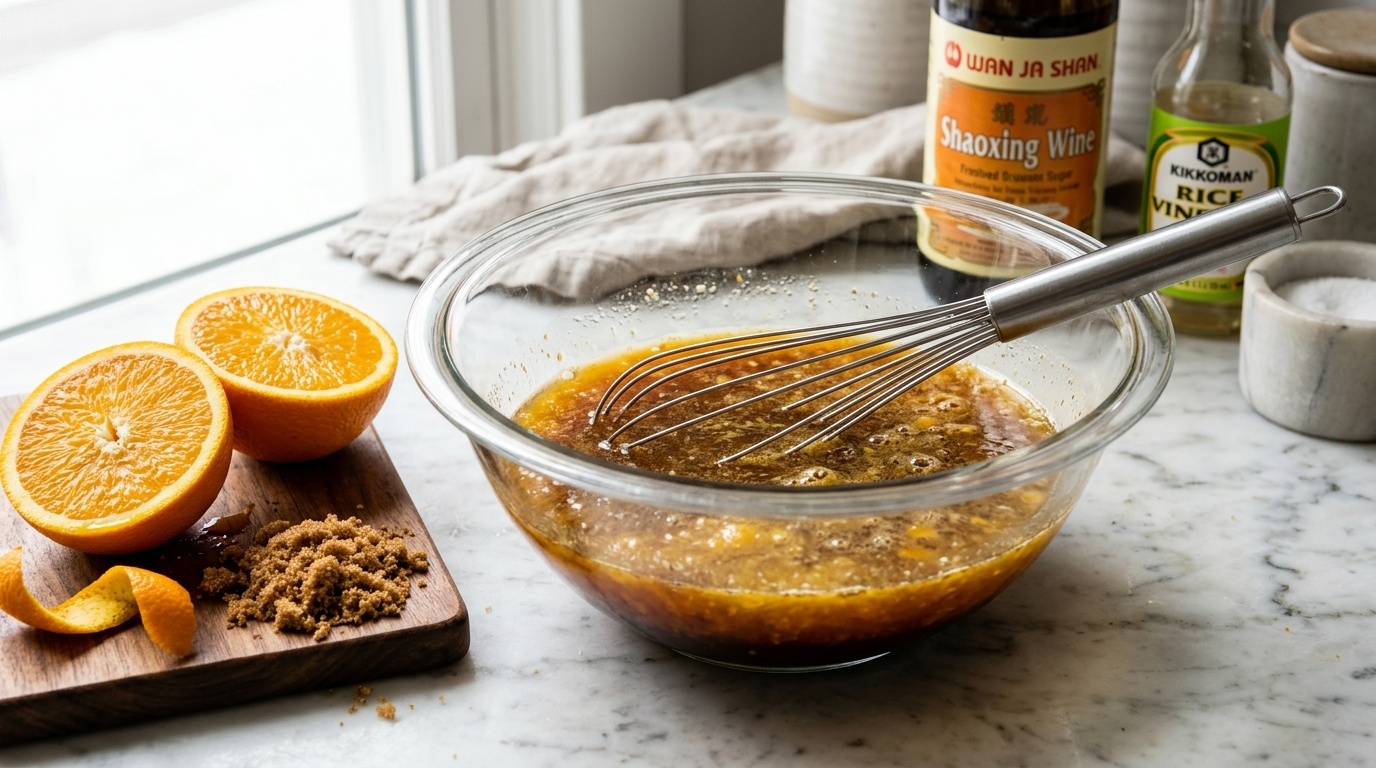
In a medium glass mixing bowl, combine the ¾ cup of freshly squeezed orange juice, ⅓ cup granulated white sugar, ¼ cup dark brown sugar, 3 tablespoons light soy sauce, 1 teaspoon dark soy sauce, ¼ cup rice vinegar, 2 tablespoons distilled white vinegar, and 2 tablespoons Shaoxing cooking wine. Whisk vigorously for 60 seconds until the sugars are completely dissolved and the liquid turns a rich, translucent amber color. Set aside.
Step 2: Sauté the Fresh Aromatics in the Wok
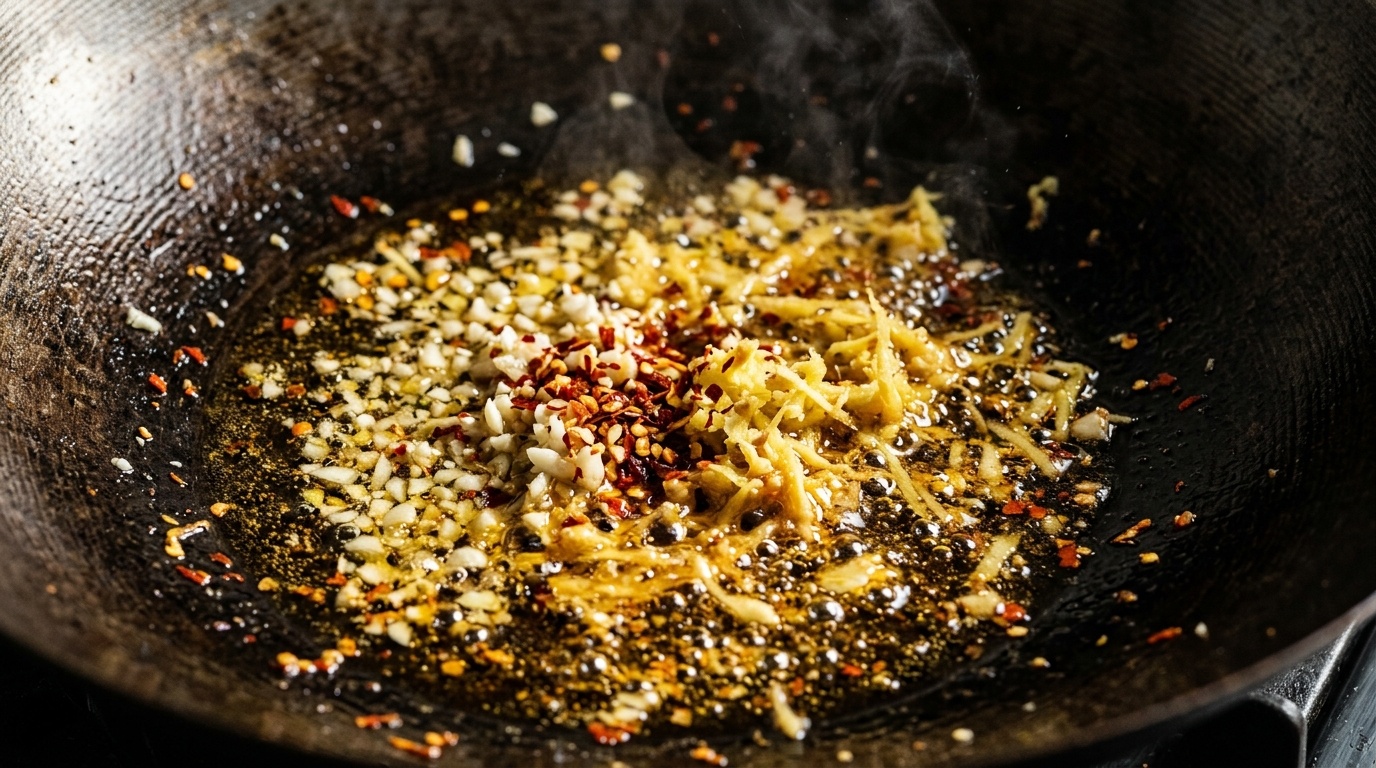
Place your carbon steel wok or heavy saucepan over medium heat. Add 1 ½ teaspoons of toasted sesame oil. Once the oil begins to shimmer, add the 3 cloves of finely minced garlic, 1 tablespoon of freshly grated ginger, and ½ teaspoon of crushed red pepper flakes. Stir-fry constantly with a wooden spatula for precisely 30 to 45 seconds. Keep the heat controlled so the garlic turns fragrant and soft without scorching or turning bitter.
Step 3: Pour in the Orange Sauce Base and Simmer
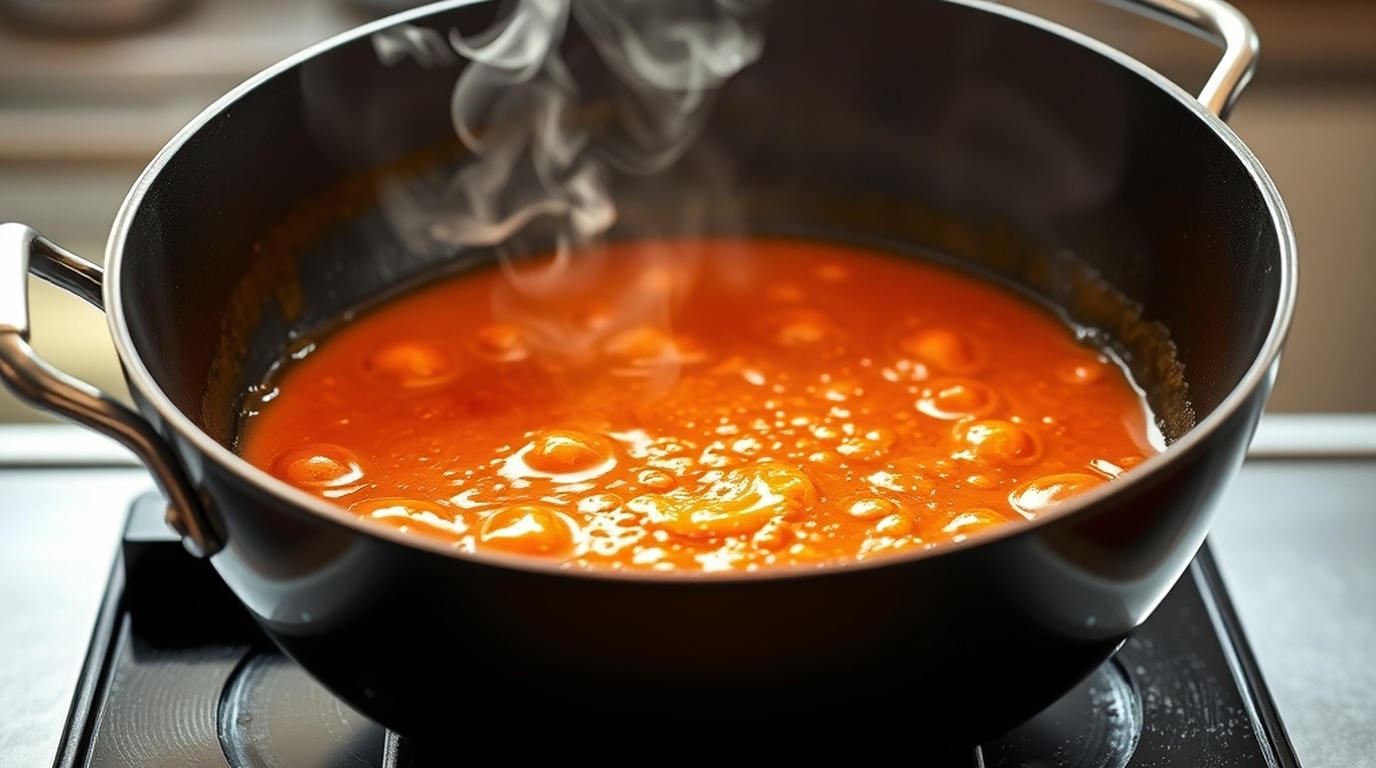
Pour the whisked orange sauce base into the hot wok over the sizzling aromatics. Increase the stovetop heat to medium-high and bring the mixture to a lively, rolling boil. Allow the liquid to bubble vigorously for 3 to 4 minutes, stirring occasionally. This rapid initial reduction concentrates the natural orange juice sugars, boils off the alcohol in the Shaoxing wine, and blends the pungent garlic and ginger seamlessly into the syrup.
Step 4: Prepare the Smooth Cornstarch Slurry
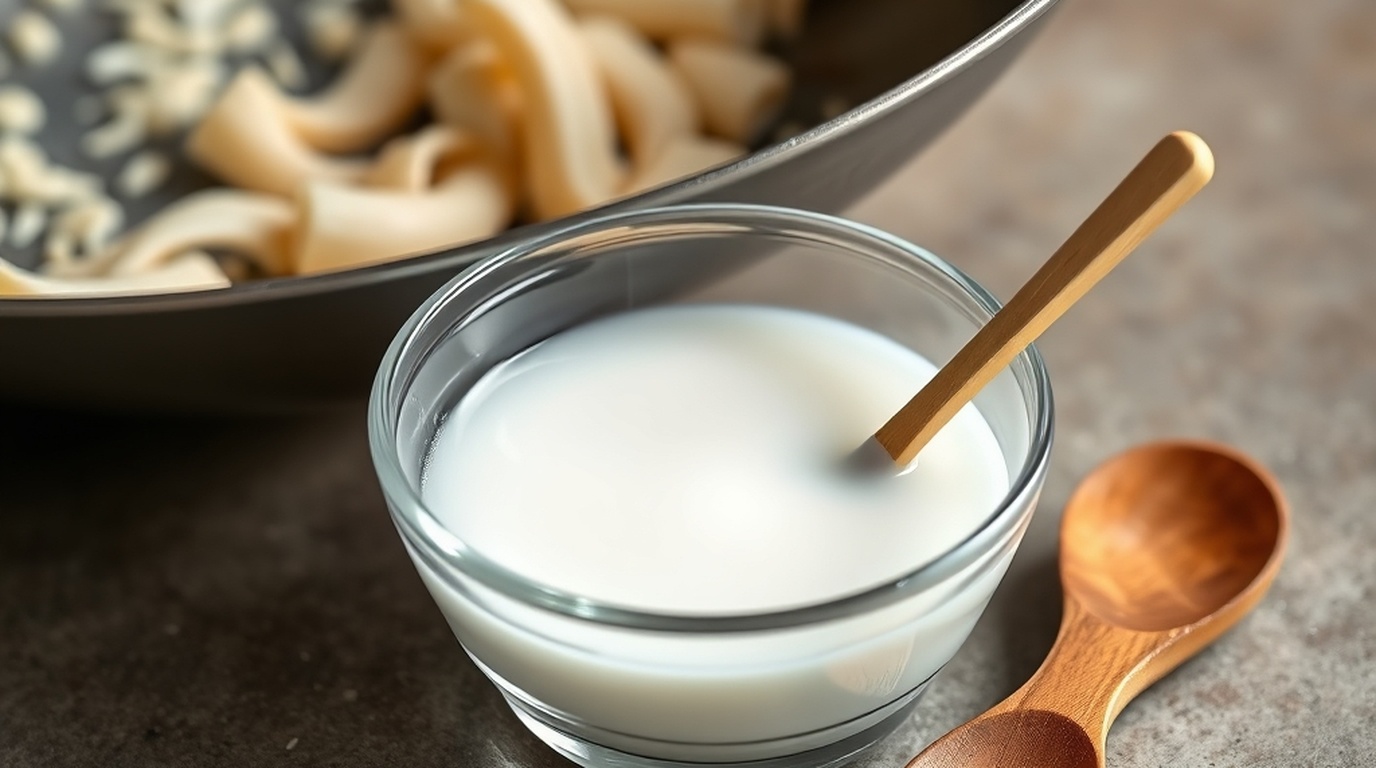
While the orange sauce is simmering, prepare your thickening agent. In a small prep bowl or ramekin, whisk together 2 tablespoons of cornstarch and 2 tablespoons of cold tap water until completely homogenous, smooth, and chalky white with zero lumps. Always re-stir the slurry immediately before pouring, as starch granules settle rapidly to the bottom of the bowl.
Step 5: Thicken into a Glossy Translucent Glaze
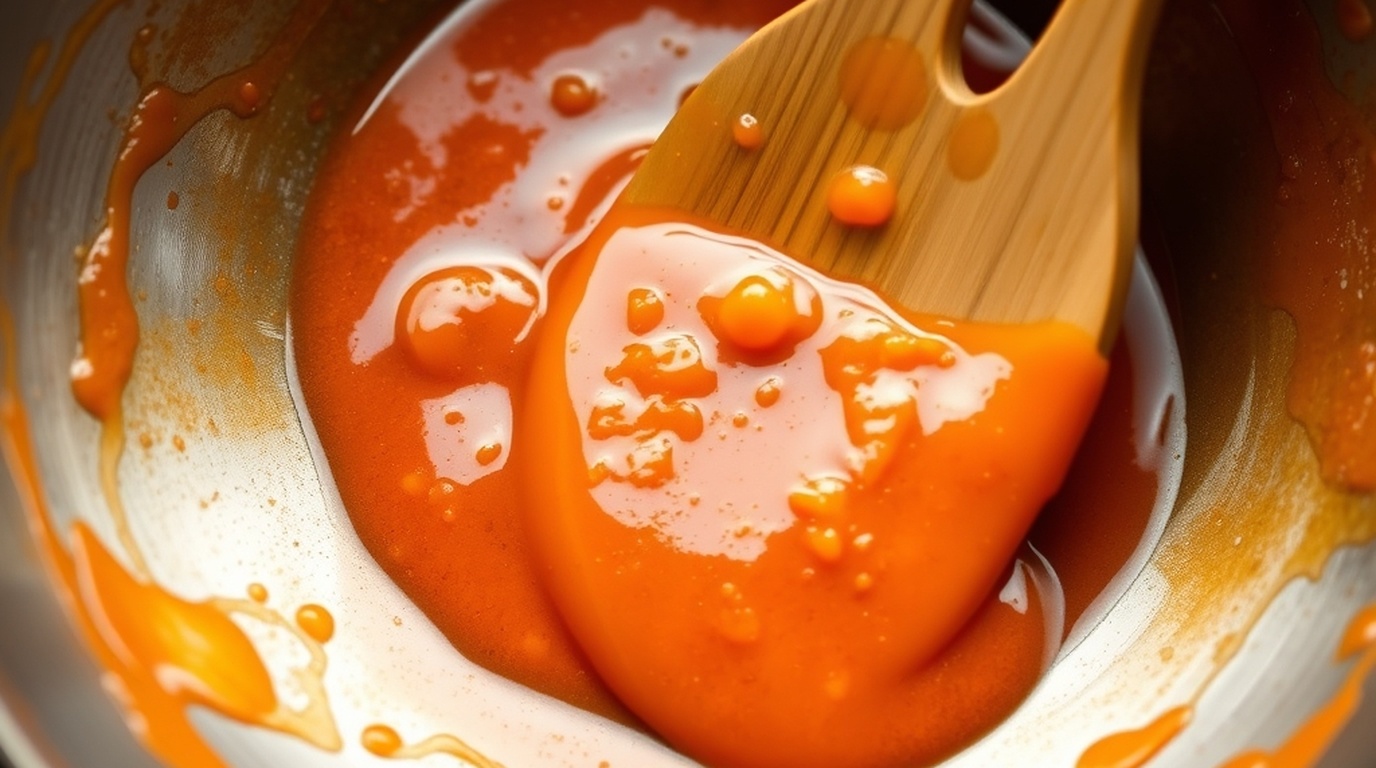
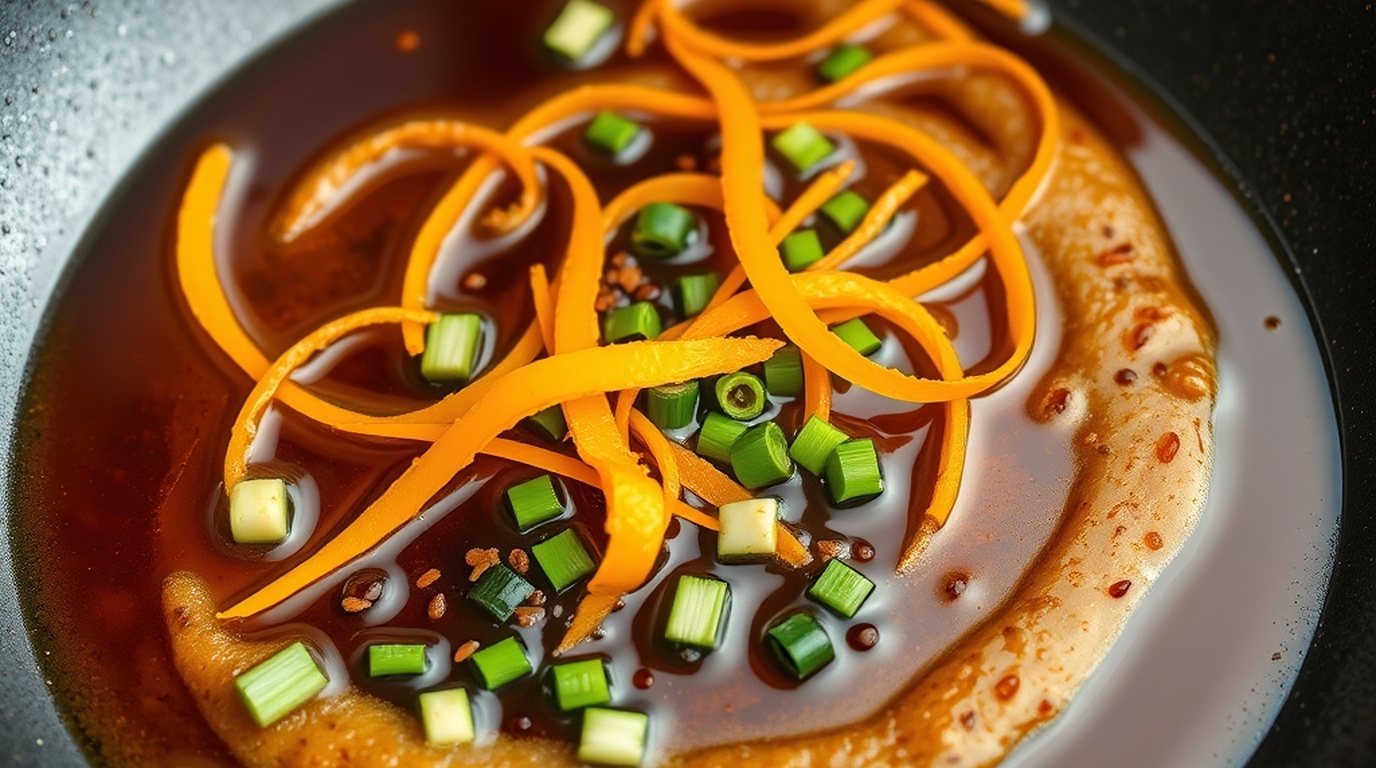
Reduce the wok heat to medium. Give the cornstarch slurry a final quick whisk, then slowly drizzle it into the simmering orange sauce in a steady stream while continuously whisking the sauce with your other hand. Continue to cook, stirring constantly, for 60 to 90 seconds. Watch the sauce magically transform: the cloudy liquid will suddenly clear up, darkening into a mirror-like, hyper-glossy, translucent amber glaze that clings luxuriously to the back of your spatula.
Step 6: Finish with Orange Zest, Sesame Oil & Scallions
Remove the wok completely from the heat source. Immediately fold in the 1 tablespoon of freshly grated orange zest, the remaining 1 ½ teaspoons of toasted sesame oil, and 1 tablespoon of sliced green scallions. Folding the zest and finishing oil off the heat preserves the delicate volatile citrus aroma and nutty sesame perfume from evaporating.
Step 7: Toss with Crispy Chicken or Serve as Dipping Sauce
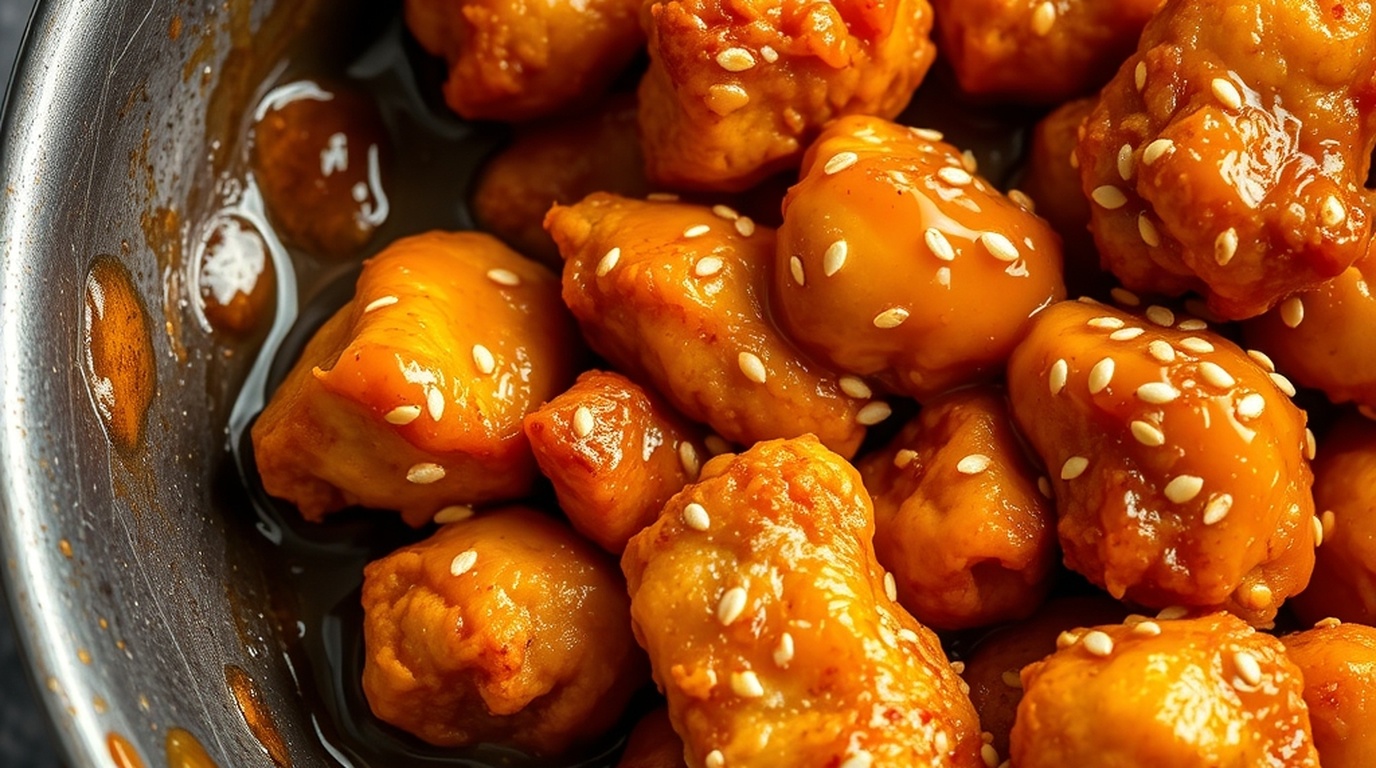
If you are making classic Orange Chicken, immediately add your freshly fried, hot, crispy battered chicken pieces directly into the hot wok. Toss rapidly for 30 to 45 seconds until every crunchy nook and cranny is coated in glistening orange lacquer. Transfer to a serving platter, sprinkle with toasted white sesame seeds and extra fresh scallions, and serve piping hot alongside steaming jasmine rice!
Executive Chef Secrets for Authentic Wok-Glazed Perfection
To ensure your homemade sauce rivals the best Panda Express location in the country, adhere to these professional kitchen secrets:
- The 60-Second Wok Toss Rule: The cardinal sin of Orange Chicken is pouring hot sauce over fried chicken and letting it sit on the counter. In professional Chinese restaurants, crispy chicken is added directly into the wok while the sauce is actively bubbling. The violent steam locks the glaze onto the crunchy starch coating without softening the crust. Toss for no more than 60 seconds, then plate immediately!
- Never Skip the Dark Soy Sauce: Light soy sauce provides salty flavor, but lack of color will leave your sauce looking pale yellow like sweet-and-sour dip. Adding just one teaspoon of dark soy sauce provides the rich, caramelized deep mahogany color characteristic of authentic Panda Express glaze.
- Balancing Acidity with Two Vinegars: Panda Express sauce possesses a unique tartness that isn’t purely citrus. Combining mellow rice vinegar with sharp distilled white vinegar delivers the exact dual-acid punch that cuts through the heavy fried chicken batter and prevents the sauce from tasting cloying.
- Zest at the Very End: Boiling citrus zest destroys delicate essential oils and extracts bitter tannins from the white pith. Always fold the finely microplaned orange zest in after the heat is turned off. The residual heat of the glaze will awaken the citrus oils without degrading their perfume.
Storage, Freezing & Reheating Guidelines
While freshly tossed Orange Chicken is best consumed immediately, the sauce itself is exceptionally versatile and meal-prep friendly:
- Refrigeration: Allow the sauce to cool completely to room temperature. Pour into a sealed glass mason jar or airtight squeeze bottle and store in the refrigerator for up to 10 days. The natural sugars and vinegar act as natural preservatives.
- Freezing: You can freeze this sauce for up to 3 months! Pour the cooled glaze into silicone freezer trays or zip-top freezer bags. Thaw overnight in the refrigerator before reheating.
- Reheating Method: As the sauce chills, the cornstarch will gelatinize into a thick jelly. Do not worry! Pour the sauce into a small saucepan or wok over medium-low heat with 1 to 2 tablespoons of water or fresh orange juice. Whisk gently as it warms; within 2 minutes, the starch will re-liquefy into its original silky, glossy consistency.
- Alternative Uses: This sauce is not just for chicken! It makes an incredible glaze for crispy air-fried tofu, roasted Brussels sprouts, grilled salmon fillets, cocktail meatballs, or wok-tossed shrimp.
Panda Express Orange Chicken Sauce — The Authentic Copycat Recipe
Ingredients
- ¾ cup fresh orange juice + 1 tbsp fresh orange zest
- ⅓ cup white sugar + ¼ cup dark brown sugar
- 3 tbsp light soy sauce + 1 tsp dark soy sauce
- ¼ cup rice vinegar + 2 tbsp white vinegar
- 2 tbsp Shaoxing cooking wine (or dry sherry)
- 1 tbsp toasted sesame oil (divided)
- 3 cloves garlic, minced + 1 tbsp grated ginger
- ½ tsp crushed red pepper flakes
- 2 tbsp cornstarch + 2 tbsp cold water (slurry)
- 2 tbsp sliced green scallions (for garnish)
Instructions
- In a bowl, whisk orange juice, white sugar, brown sugar, light soy sauce, dark soy sauce, rice vinegar, white vinegar, and Shaoxing wine until sugars dissolve.
- Heat 1 ½ tsp sesame oil in a wok over medium heat. Sauté minced garlic, ginger, and red pepper flakes for 30 seconds until aromatic.
- Pour orange sauce base into the wok and bring to a rolling boil for 3 minutes.
- Whisk cornstarch and cold water together to form a smooth slurry.
- Slowly drizzle slurry into boiling sauce while stirring constantly. Cook for 1-2 minutes until thick, glossy, and translucent.
- Remove from heat. Fold in orange zest, remaining 1 ½ tsp sesame oil, and sliced scallions.
- Immediately toss with crispy fried chicken or transfer to a bowl for dipping. Serve warm!
Frequently Asked Questions About Panda Express Orange Chicken Sauce
Can I substitute store-bought bottled orange juice for fresh oranges?
In an absolute pinch you can use 100% pure no-pulp refrigerated orange juice, but you must supplement it with fresh orange zest. The vital flavor differentiator between fast-food perfection and mediocre sauce is the cold-pressed citrus oil contained in fresh orange peel. Zesting just one fresh orange transforms ordinary juice into an extraordinary restaurant clone.
What can I use instead of Shaoxing Chinese cooking wine?
If you cannot find Shaoxing wine in your local Asian grocery market or on Amazon, the best non-alcoholic substitute is an equal amount of apple juice or chicken bone broth mixed with ½ teaspoon of rice vinegar. If alcohol is acceptable in your cooking, dry pale sherry or Japanese mirin (reducing brown sugar by 1 tablespoon) works wonderfully.
How do I make the sauce extra spicy like Beijing Beef?
Panda Express Orange Chicken has a mild to medium background warmth from crushed red pepper flakes. To kick the heat up to fiery Hunan levels, increase the crushed red chili flakes to 1 ½ teaspoons, or stir in 1 tablespoon of Chinese chili garlic sauce (Sambal Oelek) or Sriracha during Step 2 along with the aromatics.
Why did my sauce turn out too thin or too gummy?
Sauce thickness is governed by the cornstarch-to-liquid ratio and cooking duration. If your sauce is too thin, the cornstarch was either under-measured or did not reach a full rolling boil (203°F) to fully activate the starch granules. If it turns gummy or gelatinous, you boiled it too long or added excess cornstarch; simply whisk in 2 to 3 tablespoons of warm water or fresh orange juice over low heat to restore its velvety, mirror-like consistency.
Can I use this glaze for meal prep without chicken getting soggy?
Yes! To meal prep Orange Chicken, always store the fried crispy chicken bites and the orange sauce in separate airtight containers in the refrigerator. When ready to eat, crisp the chicken in an air fryer or toaster oven at 380°F for 4 to 5 minutes, reheat the sauce separately in a skillet with a splash of water, and toss together right before serving!
Pin This Recipe For Later
Save this delicious homemade recipe & step-by-step cooking guide directly to your Pinterest board!