Affiliate Disclosure: This post may contain affiliate links. If you make a purchase through these links, we may earn a commission at no extra cost to you. For more information, please see our affiliate disclosure.
Welcome back to Food Jot! Today, we’re diving deep into a kitchen appliance debate that has simmered for years: Vitamix vs Ninja Blender. As a passionate home cook and recipe developer, my blender is arguably the most used appliance in my kitchen. From morning smoothies to creamy soups and homemade nut butters, it works tirelessly every single day.
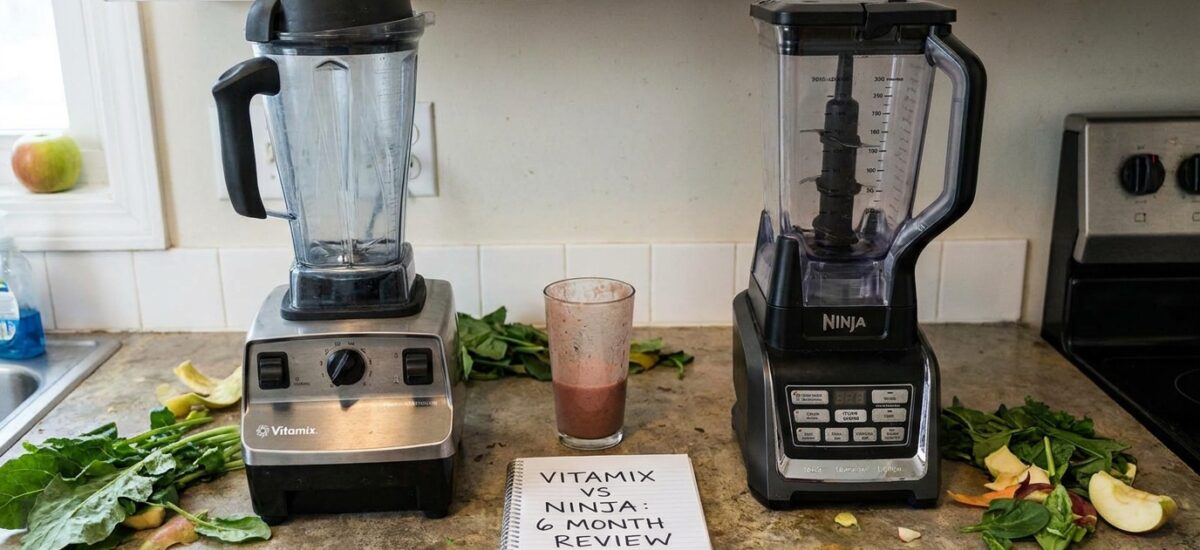
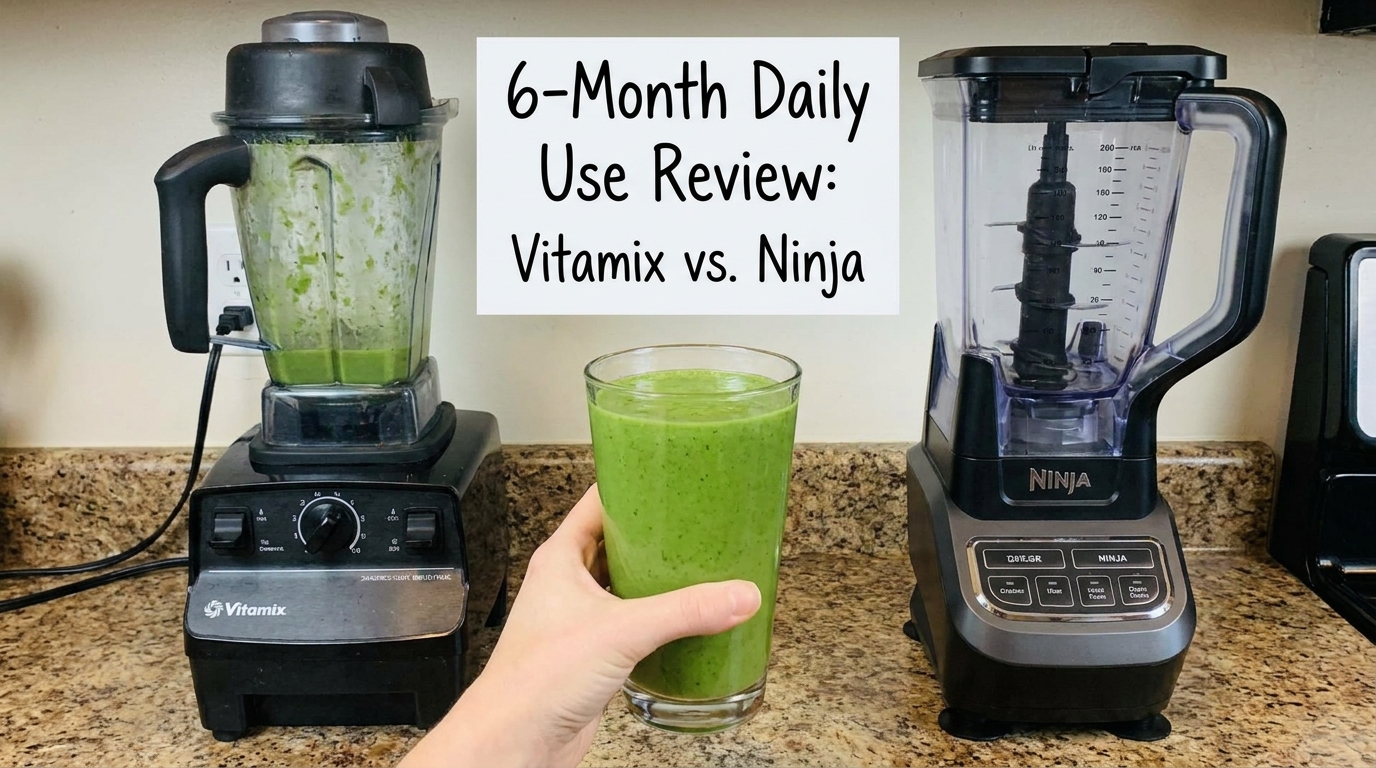
For the past six months, I’ve put both a high-end Vitamix model and a versatile Ninja system through their paces. I’m talking daily use, side-by-side, pushing them to their limits with everything from frozen fruit to tough greens and even hot ingredients. My goal? To provide you with an honest, no-holds-barred answer to which blender truly reigns supreme, and more importantly, which one is right for your culinary needs.
Forget the spec sheets for a moment; this isn’t just about watts and RPMs. This is about real-world performance, user experience, and long-term value. Let’s blend into it!
Product Spotlight
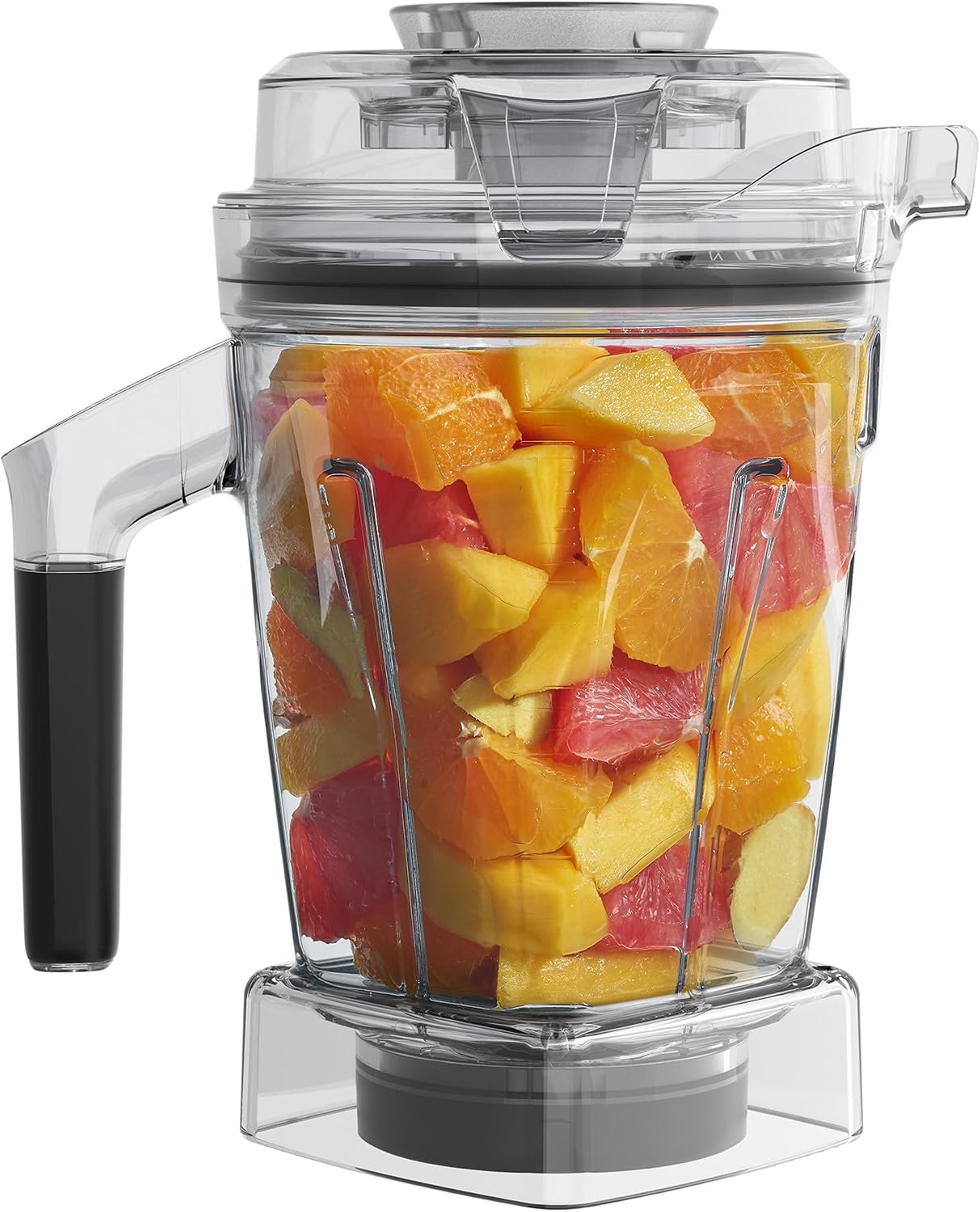
Vitamix Ascent Series A3500 Smart Blender
$599.9564-ounce Low-Profile Container capacity. 2.2 Peak HP Motor power.
Buy on AmazonStep-by-Step Instructions
Initial Impressions & Design
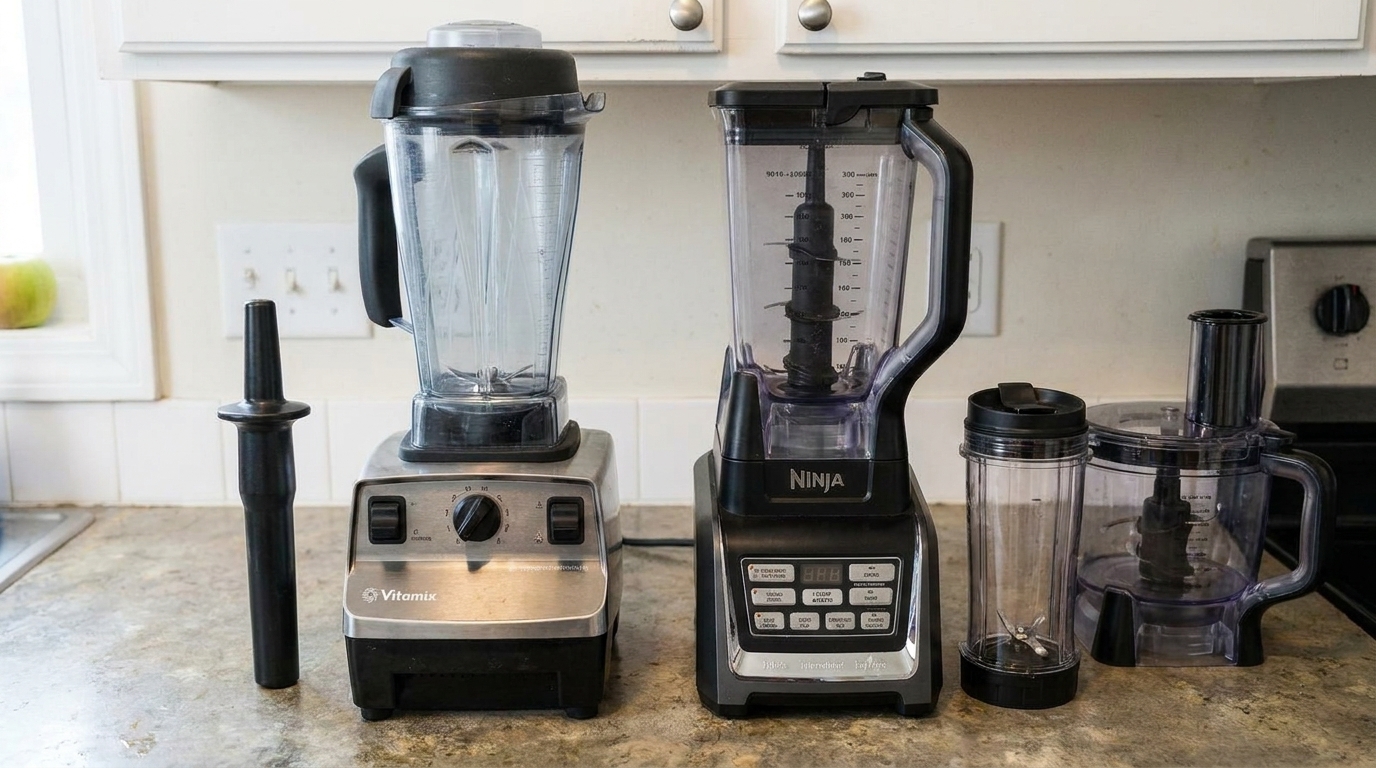
Unboxing both the Vitamix and Ninja, the differences in philosophy are immediately apparent. The Vitamix, typically, boasts a more robust, industrial feel. Its base is heavy, signaling powerful mechanics within, and the classic tamper is a signature feature. The design is sleek, often minimalist, and built to last. It feels like a professional piece of equipment ready for a busy restaurant kitchen, yet perfectly at home in a high-end domestic setting. For a closer look at similar high-quality kitchen tools, check out our guide on the Best Food Processors for Home Cooks.
The Ninja, on the other hand, often presents itself as a more modular and versatile system. Many Ninja models come with multiple pitchers, personal blending cups, and even food processor attachments. While the build quality is solid, it tends to feel lighter than a Vitamix. The aesthetics can be a bit more futuristic with digital displays and multiple preset programs. It’s designed to be a multi-functional workhorse, appealing to those who want one machine to do it all.
Vitamix: The Powerhouse Aesthetic
The Vitamix’s construction speaks volumes about its durability. The motor base is substantial, preventing any wobbling even during intense blending tasks. The pitcher, often made of BPA-free Tritan plastic, is thick and feels incredibly sturdy. Its simple, intuitive controls usually consist of a variable speed dial and a pulse switch, making it straightforward to operate. It’s a classic design that prioritizes function and longevity. You can find excellent Vitamix models like the Vitamix Ascent Series A3500, known for its powerful motor and smart features.
Ninja: The Versatile System
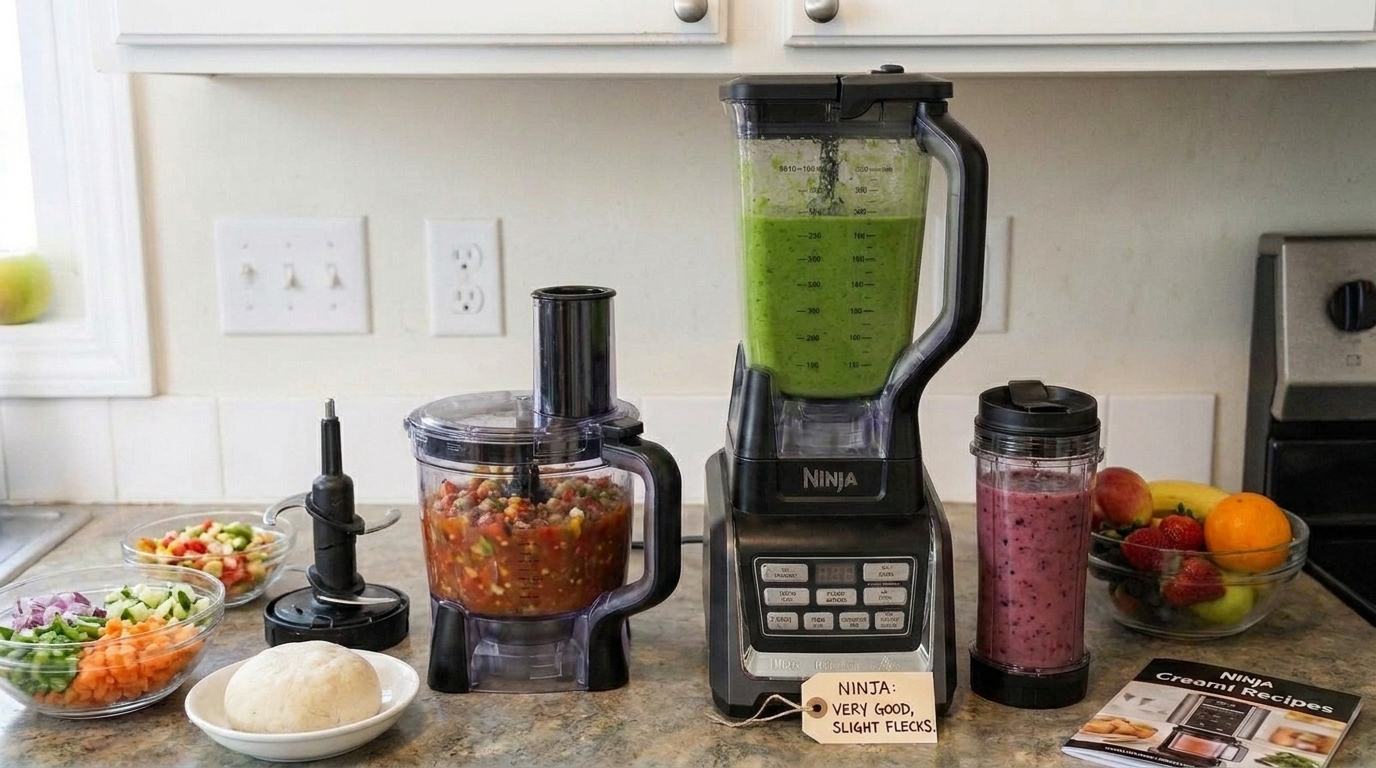
Ninja blenders, particularly their ‘kitchen systems,’ are designed for maximum utility. They might include a large blender pitcher, a food processor bowl, and individual smoothie cups, all powered by the same motor base. This modularity is a huge selling point for kitchens with limited space or those who need a range of functions without buying multiple appliances. While robust, the plastic components might feel less premium than Vitamix’s, but they are certainly durable enough for daily family use. The Ninja Foodi Power Pitcher System is a prime example of this versatility.
Performance & Power: Where the Rubber Meets the Road
This is where the true test lies. Both blenders promise smooth results, but how do they handle the toughest ingredients? After six months, I can confidently say both are excellent, but they excel in different areas.
Smoothies & Green Juices
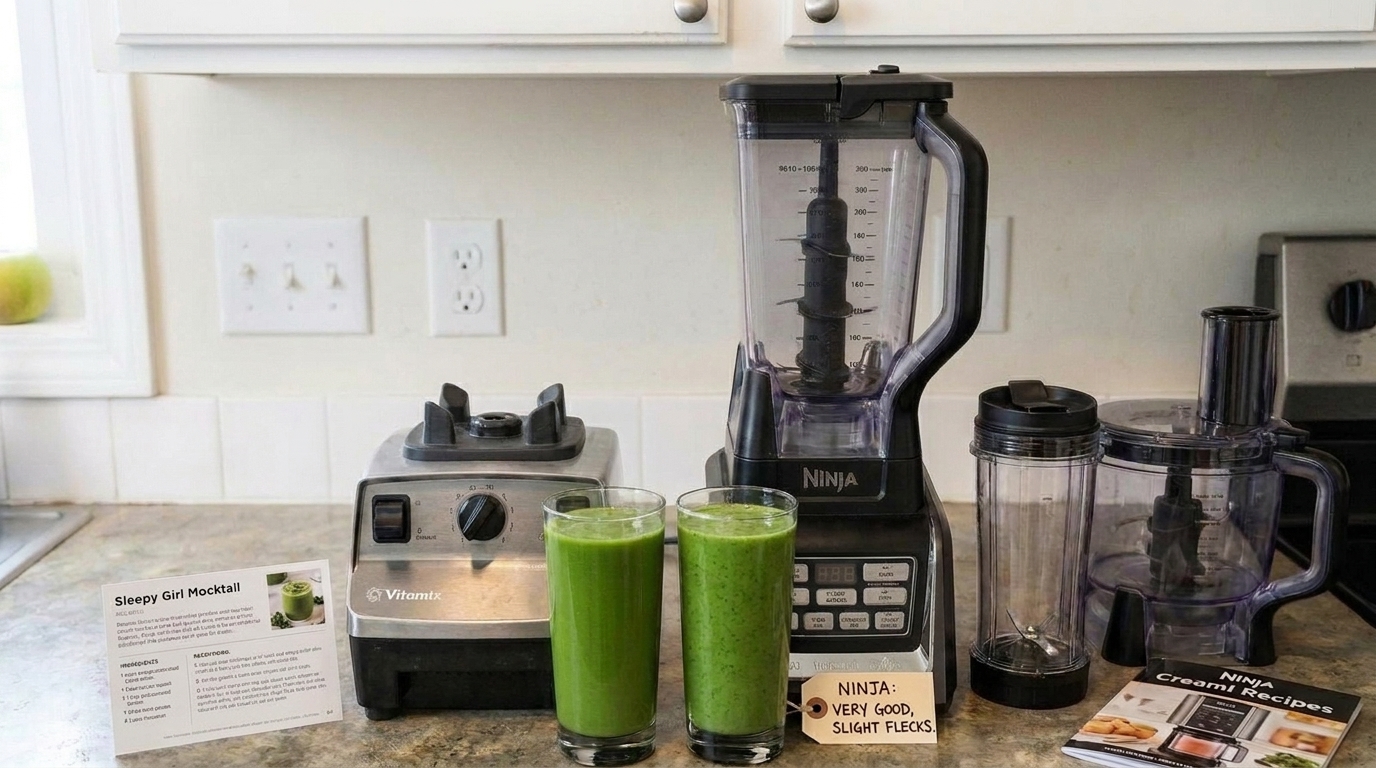
When it comes to ultra-smooth concoctions like green smoothies or creamy protein shakes, the Vitamix consistently delivers. Its powerful motor and precision-engineered blades pulverize fibrous ingredients like kale, spinach, and ginger into a silky-smooth liquid with no discernible chunks. The tamper is invaluable here, helping to push ingredients into the vortex without adding extra liquid. My morning routine was significantly upgraded by the consistency. For more on optimizing your morning drinks, explore recipes like the Sleepy Girl Mocktail which benefits from a smooth blend.
The Ninja also makes excellent smoothies, especially with its personal blending cups. However, with very tough or fibrous greens in the larger pitcher, I occasionally found tiny flecks that the Vitamix would have obliterated. It still achieved a very good consistency, but the Vitamix had a slight edge in achieving that ‘velvet’ texture. For a great Ninja-specific blending experience, consider experimenting with Ninja Creami Recipes to see its versatility.
Soups & Sauces
This is another area where Vitamix shines. Its ability to create hot soups from cold ingredients, simply through friction, is nothing short of amazing. The powerful motor generates enough heat to bring soups to serving temperature in minutes, resulting in incredibly smooth and creamy textures like tomato soup or butternut squash bisque. The sheer power also makes quick work of emulsifying dressings and sauces to perfection.
The Ninja can certainly make smooth soups and sauces, but it doesn’t have the same friction-heating capability. You’ll need to heat your ingredients beforehand or transfer them to a stovetop afterward. While it still blends efficiently, the texture might not always reach the same level of refined smoothness as the Vitamix, especially with thicker mixtures. For those interested in other kitchen tools that assist with soups, consider reading about the Best Electric Pressure Cookers for Beginners.
Nut Butters & Heavy Blending
Making homemade nut butter is a true test of a blender’s motor and blade design. The Vitamix handles this task like a champion. Its robust motor can power through nuts, transforming them into creamy butter without overheating. The tamper is crucial here, allowing you to continuously process the ingredients without stopping the machine. It’s a smooth, controlled process that highlights Vitamix’s high-torque capabilities.
The Ninja can make nut butter, but it often requires more frequent stops to scrape down the sides and can sometimes struggle with the consistency, especially if you’re aiming for that super-creamy, drippy texture. Its blades are designed differently, often with a stacked blade assembly that is great for crushing ice but less ideal for creating a continuous vortex for thick pastes. You might find yourself adding more oil to achieve the desired consistency. For serious home cooks, a dedicated food processor might be a better alternative for tasks like this, and you can explore options in our guide to the Best Food Processors for Home Cooks.
Versatility & Attachments
Here’s where the Ninja often pulls ahead, particularly in its ‘system’ offerings. Many Ninja models are designed to be multi-functional, offering a blender, food processor, and personal blender all in one package.
Ninja’s Multi-Tasking Advantage
If you’re looking for an appliance that can chop vegetables, knead dough, and blend smoothies, a Ninja Kitchen System is incredibly appealing. The interchangeable bases and various attachments mean you can switch from making a large batch of salsa to a single-serve smoothie without needing separate appliances. This makes it a fantastic space-saver and a budget-friendly option for those who need diverse kitchen functions. A great example is the Ninja Mega Kitchen System, which offers a powerful blender, food processor, and Nutri Ninja cups.
Vitamix’s Focused Excellence
Vitamix, while offering different container sizes and types (dry grains, smaller batches), is primarily a blender. Its strength lies in doing one thing exceptionally well: blending. While you can certainly chop vegetables or even make dough in a Vitamix, it’s not as purpose-built for these tasks as a dedicated food processor attachment in a Ninja system. However, for sheer blending power and consistency across a wide range of ingredients, it’s hard to beat. The Vitamix E310 Explorian Blender is a fantastic entry-level model that still delivers professional-grade blending.
Cleaning & Maintenance
Nobody likes cleaning kitchen appliances, especially after a messy blending session. Both brands offer relatively easy cleaning, but there are nuances.
Vitamix: Simple Self-Cleaning
Vitamix blenders are famously easy to clean. You simply fill the pitcher halfway with warm water, add a drop of dish soap, and run it on high for 30-60 seconds. The powerful vortex cleans the pitcher thoroughly. The blades are integrated into the pitcher, so there are no sharp edges to navigate. This self-cleaning feature is a huge time-saver and makes daily use much more appealing. For general kitchen maintenance, you might also find our guide on Best Electric Jar Openers helpful for other kitchen tasks.
Ninja: More Parts, Still Easy
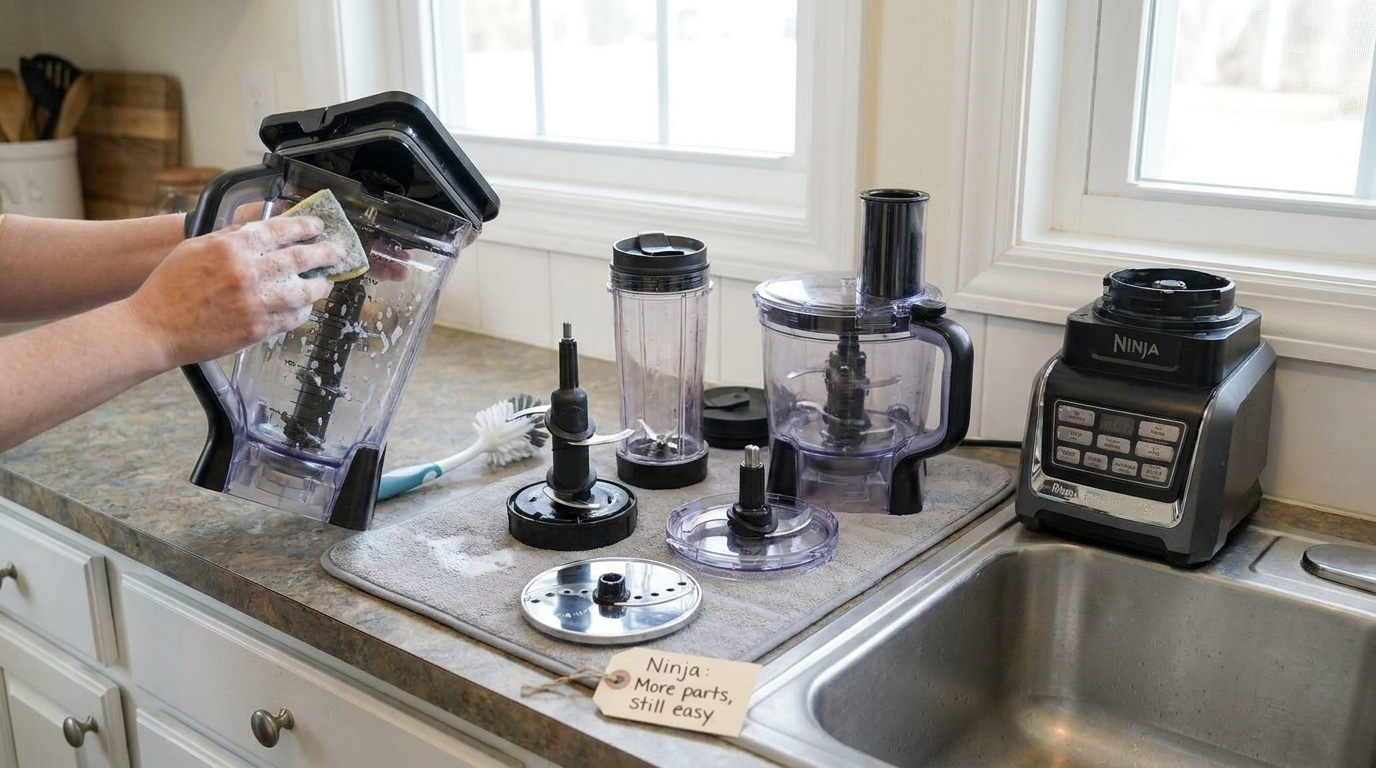
Ninja blenders, especially the systems with multiple attachments, involve more parts. The stacked blade assembly in the main pitcher is very sharp and requires careful handling during cleaning. While most parts are dishwasher safe, hand-washing can be a bit more fiddly due to the separate blades and multiple components. The personal blending cups are generally very easy to clean. Overall, it’s not difficult, but it’s not quite as effortless as the Vitamix’s self-cleaning cycle.
Price & Value
This is often the deciding factor for many home cooks. There’s a significant price difference between the two brands.
Vitamix: The Investment
Vitamix blenders are an investment. They typically range from $300 to $700+, depending on the model and features. This higher price point is justified by their exceptional durability, powerful motors, and the consistency of their blend. Many Vitamix owners report their machines lasting for decades, making the initial cost spread out over many years of reliable performance. They also come with impressive warranties, often 5-10 years. While an investment, many consider it worthwhile for the quality and longevity. Consider the Vitamix 5200 Blender Professional-Grade for a classic, powerful choice.
Ninja: The Budget-Friendly Option
Ninja blenders are much more accessible, typically ranging from $80 to $250 for their full systems. They offer incredible value for money, providing strong blending power and often multiple functions (blender, food processor, personal cups) at a fraction of the cost of a Vitamix. While they might not have the same longevity or ultra-refined blending consistency as a Vitamix, they are perfectly capable for most everyday blending tasks and represent an excellent entry point into high-performance blending. For more budget-friendly kitchen appliances, check out our insights on Best Compact Blenders 2025.
My Verdict & Recommendations
After six months of putting both the Vitamix and Ninja blenders through their paces, here’s my honest conclusion: there isn’t one ‘best’ blender; there’s the best blender for you.
Choose Vitamix if…
- You prioritize unparalleled smoothness and consistency for everything from green smoothies to hot soups and creamy nut butters.
- You value durability and a long-term investment in a professional-grade appliance.
- You plan on heavy, daily use and want a machine that can handle anything you throw at it without compromise.
- You appreciate simple, intuitive controls and effortless self-cleaning.
- You have the budget for a premium kitchen appliance.
If you’re serious about blending and want the absolute best performance, the Vitamix is worth every penny. It’s a culinary workhorse that will transform your kitchen experience.
Choose Ninja if…
- You’re looking for a versatile, multi-functional kitchen system that can blend, chop, and process food without buying multiple appliances.
- You need strong blending power for everyday tasks like smoothies, ice crushing, and sauces, but don’t necessarily require ultra-fine, professional-grade consistency for everything.
- You are working with a more modest budget but still want a reliable and powerful blender.
- You appreciate the convenience of personal blending cups for on-the-go drinks.
The Ninja offers incredible value and versatility, making it a fantastic choice for most home kitchens. It’s a capable and efficient appliance that will serve you well across many culinary tasks.
Conclusion
My six months with both the Vitamix and Ninja blenders have been incredibly insightful. While the Vitamix consistently delivered that extra layer of refined smoothness and felt like an indestructible workhorse, the Ninja impressed with its sheer versatility and excellent performance for its price point.
Ultimately, the choice between a Vitamix and a Ninja comes down to your priorities, budget, and how you plan to use your blender. Both are excellent machines that will elevate your cooking, but they cater to slightly different needs. I hope this honest, long-term review helps you make the best decision for your kitchen!
Happy blending!
Pin This Review For Later
Save this honest buying guide & pros/cons summary directly to your Pinterest Kitchen or Gadgets board!