
Affiliate Disclosure: This post may contain affiliate links. If you make a purchase through these links, we may earn a commission at no extra cost to you. For more information, please see our affiliate disclosure.
The Unexpected Star of Your Holiday Table
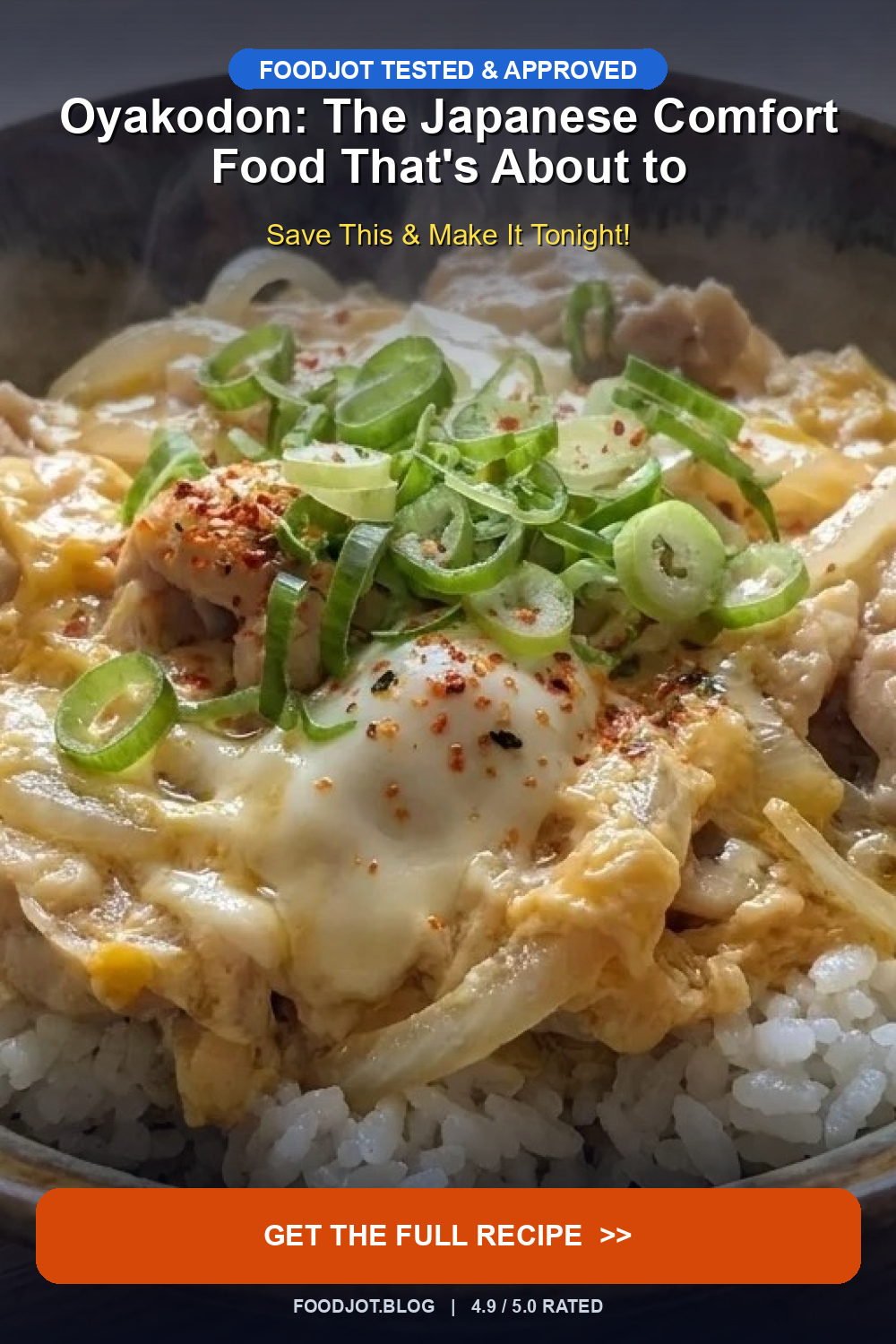
Forget the usual roasts and elaborate spreads this New Year’s. There’s a humble, yet incredibly satisfying Japanese dish poised to steal the spotlight, and once you taste it, you’ll understand why. We’re talking about Oyakodon, a beloved Japanese comfort food that translates beautifully to ‘parent and child donburi’ – referring to the chicken and egg cooked together in a savory-sweet broth and served over rice. It’s warm, deeply flavorful, and surprisingly easy to make, making it the perfect antidote to chilly winter nights and the ideal dish to share with loved ones as you welcome the new year.
While many associate Japanese cuisine with sushi or ramen, true comfort often lies in dishes like Oyakodon. It’s the kind of meal that evokes feelings of home, warmth, and nourishment. And trust us, once you introduce this gem to your New Year’s table, it might just become a cherished tradition. Get ready to impress your guests with a dish that’s both exotic and utterly comforting, a true culinary embrace for the festive season.
Why You’ll Love This Oyakodon Recipe
This Oyakodon recipe is more than just delicious; it’s a culinary hug in a bowl, perfect for any occasion but particularly special for New Year’s. Here’s why it’s about to become your new favorite:
- Quick & Easy: From start to finish, you can have a piping hot bowl of Oyakodon on your table in under 30 minutes. It’s perfect for busy weeknights or when you need a comforting meal without the fuss.
- Deeply Flavorful: The savory dashi broth, combined with sweet mirin and umami-rich soy sauce, creates an irresistible flavor profile that coats every piece of tender chicken and fluffy egg.
- One-Pan Wonder: Everything cooks together in a single skillet, minimizing cleanup and maximizing convenience.
- Customizable: While chicken and egg are traditional, you can easily adapt this dish with other proteins or vegetables to suit your taste.
- Hearty & Satisfying: Served over a bed of steaming white rice, Oyakodon is a complete meal that will leave you feeling full and contented. For another fantastic Japanese meal, check out our Crispy Japanese Tonkatsu Pork Cutlets.
Ingredients
- 2 boneless, skinless chicken thighs (about 8 oz), cut into 1-inch pieces
- 1 small onion, thinly sliced
- 4 large eggs, lightly beaten
- 1/2 cup dashi broth (or water + 1/2 tsp )
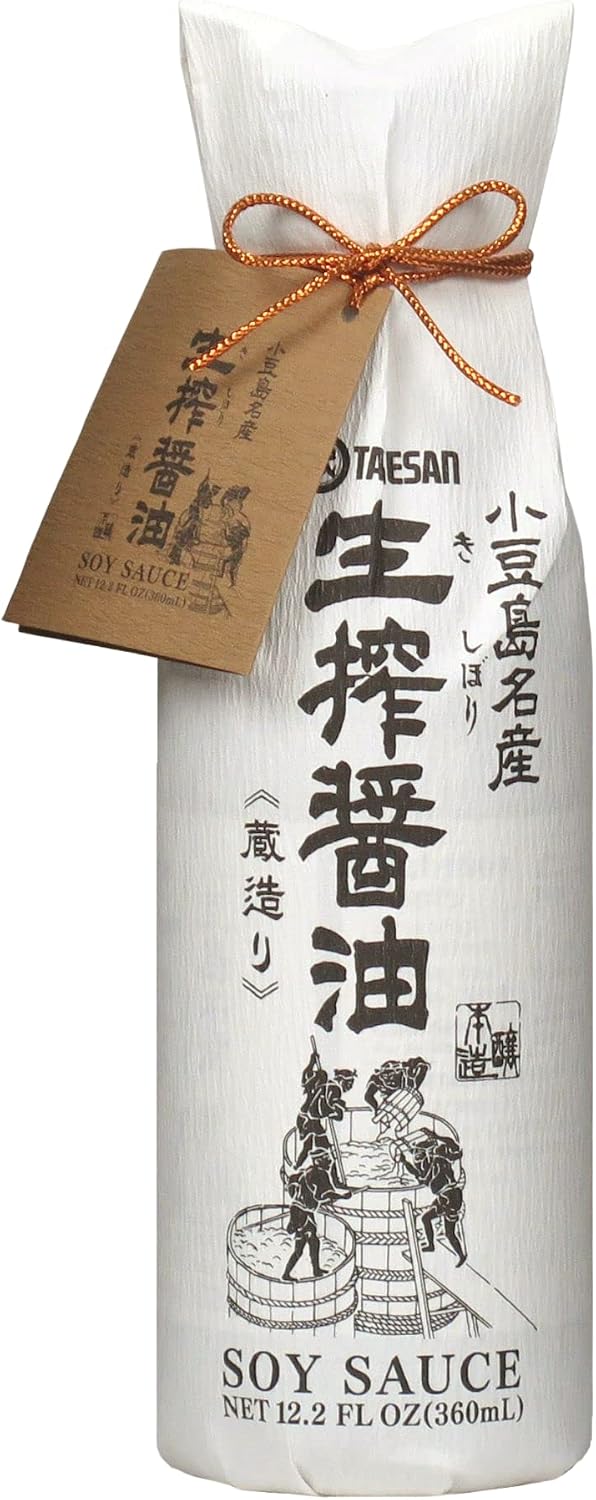
- 2 tablespoons
- 2 tablespoons
- 1 tablespoon sugar
- 1 tablespoon sake (optional, but recommended)
- 2 scallions, thinly sliced (for garnish)
- Cooked white rice, for serving (we recommend using a for perfectly fluffy rice every time)
- Shichimi Togarashi (Japanese seven-spice blend), for serving (optional)
Product Spotlight
Step-by-Step Instructions
Here’s how to create this soul-warming Oyakodon that will be the talk of your New Year’s gathering.
Step 1: Prepare the Broth
In a medium non-stick skillet (a 10-inch works perfectly for this), combine the dashi broth, soy sauce, mirin, sugar, and sake (if using). Bring the mixture to a gentle simmer over medium heat, stirring until the sugar is fully dissolved. Allow it to simmer for about 1-2 minutes to meld the flavors.
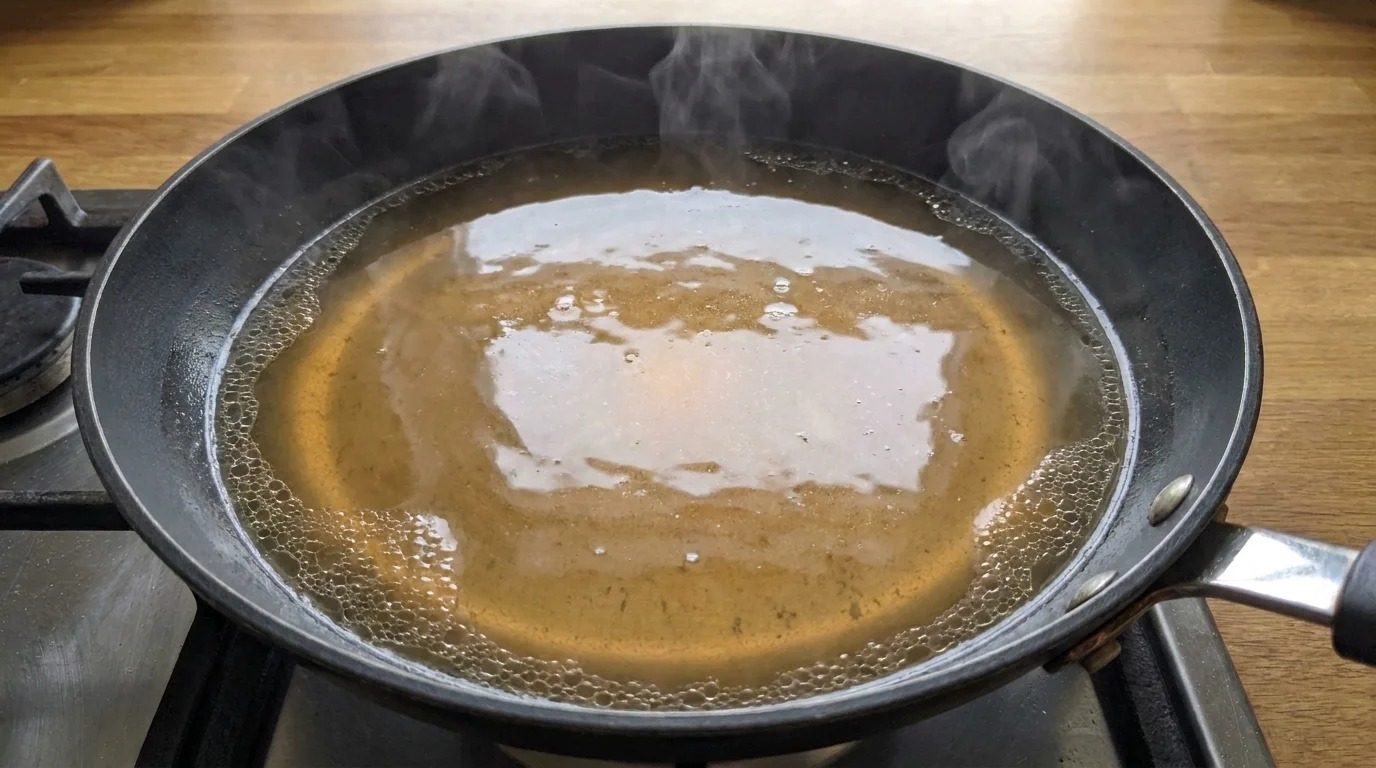
Image: A close-up, photorealistic shot of a clear dashi broth simmering gently in a non-stick skillet, with a subtle steam rising. The liquid is a light amber color, reflecting the warm kitchen lights, and small bubbles form at the edges.
Step 2: Add Chicken and Onion
Add the sliced chicken thighs and thinly sliced onion to the simmering broth. Arrange them in a single layer as much as possible. Continue to simmer for 5-7 minutes, or until the chicken is cooked through and the onions have softened and become translucent. The chicken should be tender and absorb some of the broth’s delicious flavor.
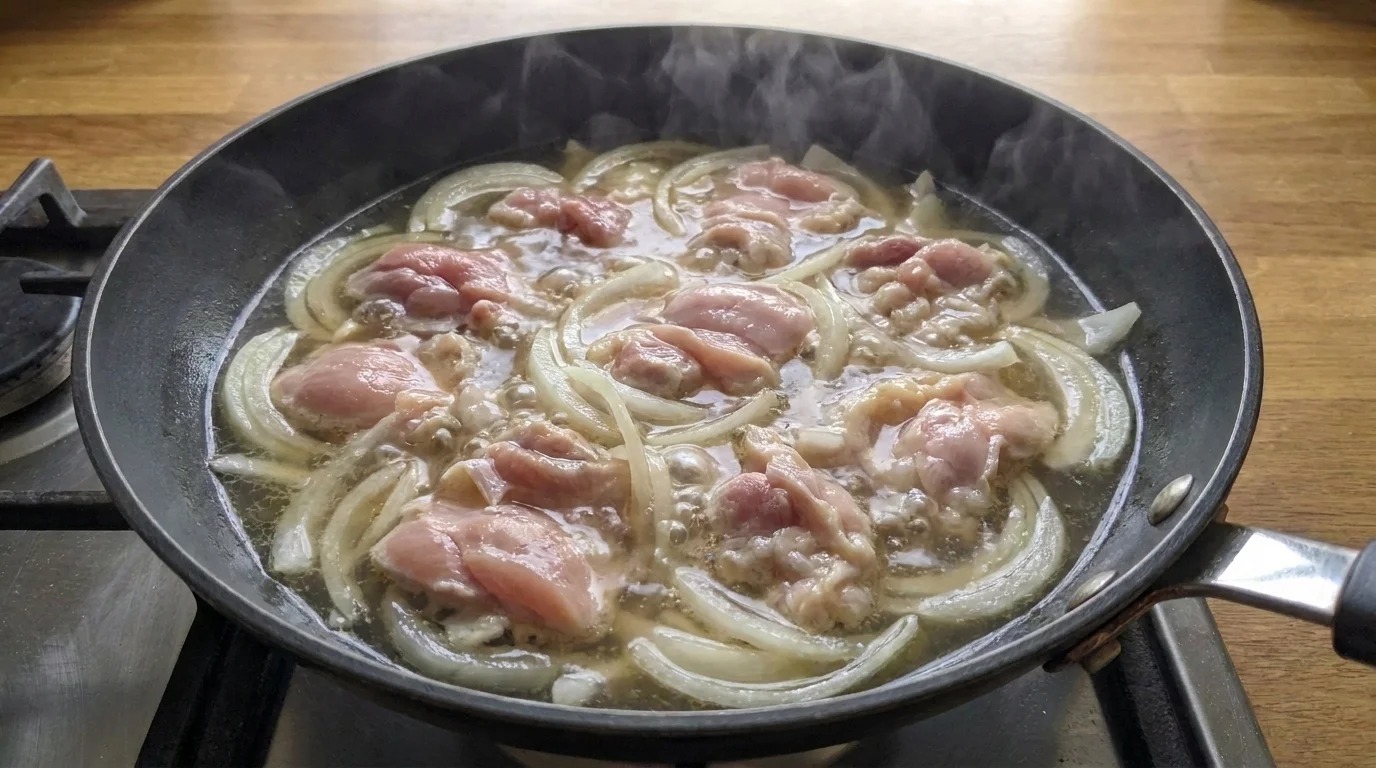
Image: Photorealistic image showing raw chicken pieces and thinly sliced white onions gently simmering in the clear dashi broth inside a non-stick skillet. The chicken is beginning to turn opaque, and the onions are slightly softened, absorbing the liquid.
Step 3: Pour in Eggs
Once the chicken is cooked, gently pour the lightly beaten eggs evenly over the chicken and onions in the skillet. Do not stir. Cover the skillet immediately with a lid and cook for 1-2 minutes, or until the eggs are mostly set but still slightly runny in the center. The residual heat will continue to cook the eggs even after removing from the heat, so be careful not to overcook them.

Image: A photorealistic, high-angle shot of lightly beaten eggs being poured over the cooked chicken and softened onions in a simmering skillet. The eggs are spreading evenly, and the steam from the broth is visible.
Step 4: Assemble and Serve
Carefully slide the chicken and egg mixture onto individual bowls of hot, steamed white rice. Garnish generously with thinly sliced scallions and a sprinkle of Shichimi Togarashi if desired. Serve immediately in traditional for an authentic experience. For other quick and satisfying meals, try our Homemade Poke Bowl Recipe.

Image: A beautifully plated, photorealistic Oyakodon served in a traditional ceramic donburi bowl. Fluffy, partially set eggs and tender chicken are artfully arranged over glistening white rice, garnished with vibrant green scallions and a sprinkle of red shichimi togarashi.
Oyakodon: The Japanese Comfort Food That’s About to Take Over Every New Year’s Table (And Nobody’s Ready)
Ingredients
- 2 boneless, skinless chicken thighs (about 8 oz), cut into 1-inch pieces
- 1 small onion, thinly sliced
- 4 large eggs, lightly beaten
- 1/2 cup dashi broth (or water + 1/2 tsp dashi powder)
- 2 tablespoons Japanese soy sauce
- 2 tablespoons mirin
- 1 tablespoon sugar
- 1 tablespoon sake (optional)
- 2 scallions, thinly sliced (for garnish)
- Cooked white rice, for serving
- Shichimi Togarashi (Japanese seven-spice blend), for serving (optional)
Instructions
- In a medium non-stick skillet, combine the dashi broth, soy sauce, mirin, sugar, and sake (if using). Bring the mixture to a gentle simmer over medium heat, stirring until the sugar is fully dissolved. Allow it to simmer for about 1-2 minutes to meld the flavors.
- Add the sliced chicken thighs and thinly sliced onion to the simmering broth. Arrange them in a single layer as much as possible. Continue to simmer for 5-7 minutes, or until the chicken is cooked through and the onions have softened and become translucent. The chicken should be tender and absorb some of the broth’s delicious flavor.
- Once the chicken is cooked, gently pour the lightly beaten eggs evenly over the chicken and onions in the skillet. Do not stir. Cover the skillet immediately with a lid and cook for 1-2 minutes, or until the eggs are mostly set but still slightly runny in the center. The residual heat will continue to cook the eggs even after removing from the heat, so be careful not to overcook them.
- Carefully slide the chicken and egg mixture onto individual bowls of hot, steamed white rice. Garnish generously with thinly sliced scallions and a sprinkle of Shichimi Togarashi if desired. Serve immediately for the best experience.
FAQ Section
Can I use chicken breast instead of thighs?
What is dashi broth and where can I find it?
Can I prepare Oyakodon ahead of time?
Conclusion
Oyakodon is more than just a meal; it’s a celebration of simple, comforting flavors that bring people together. Its ease of preparation and universal appeal make it an ideal dish for your New Year’s table, offering a delicious and warm start to the year. Whether you’re a seasoned chef or a kitchen novice, this recipe is designed for success, promising a dish that’s as satisfying to make as it is to eat.
For more Japanese comfort food ideas and inspiration, explore resources like Serious Eats’ collection of Japanese comfort food recipes, or dive into the extensive archives of Just One Cookbook for authentic Japanese cooking. You can also find additional dinner recipes on Sudachi Recipes. Don’t be afraid to experiment and make this recipe your own. Happy New Year, and happy cooking!
Pin This Review For Later
Save this honest buying guide & pros/cons summary directly to your Pinterest Kitchen or Gadgets board!